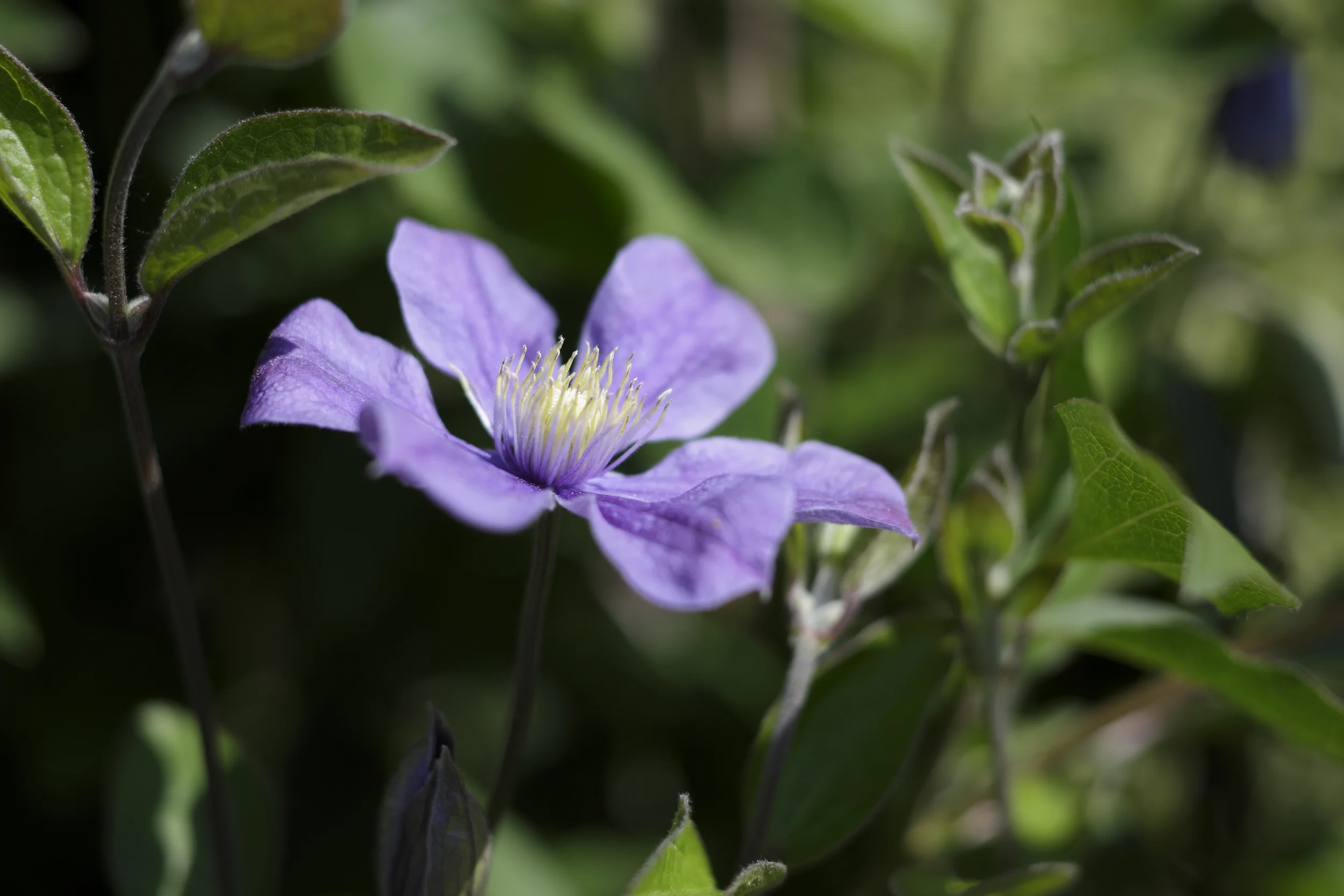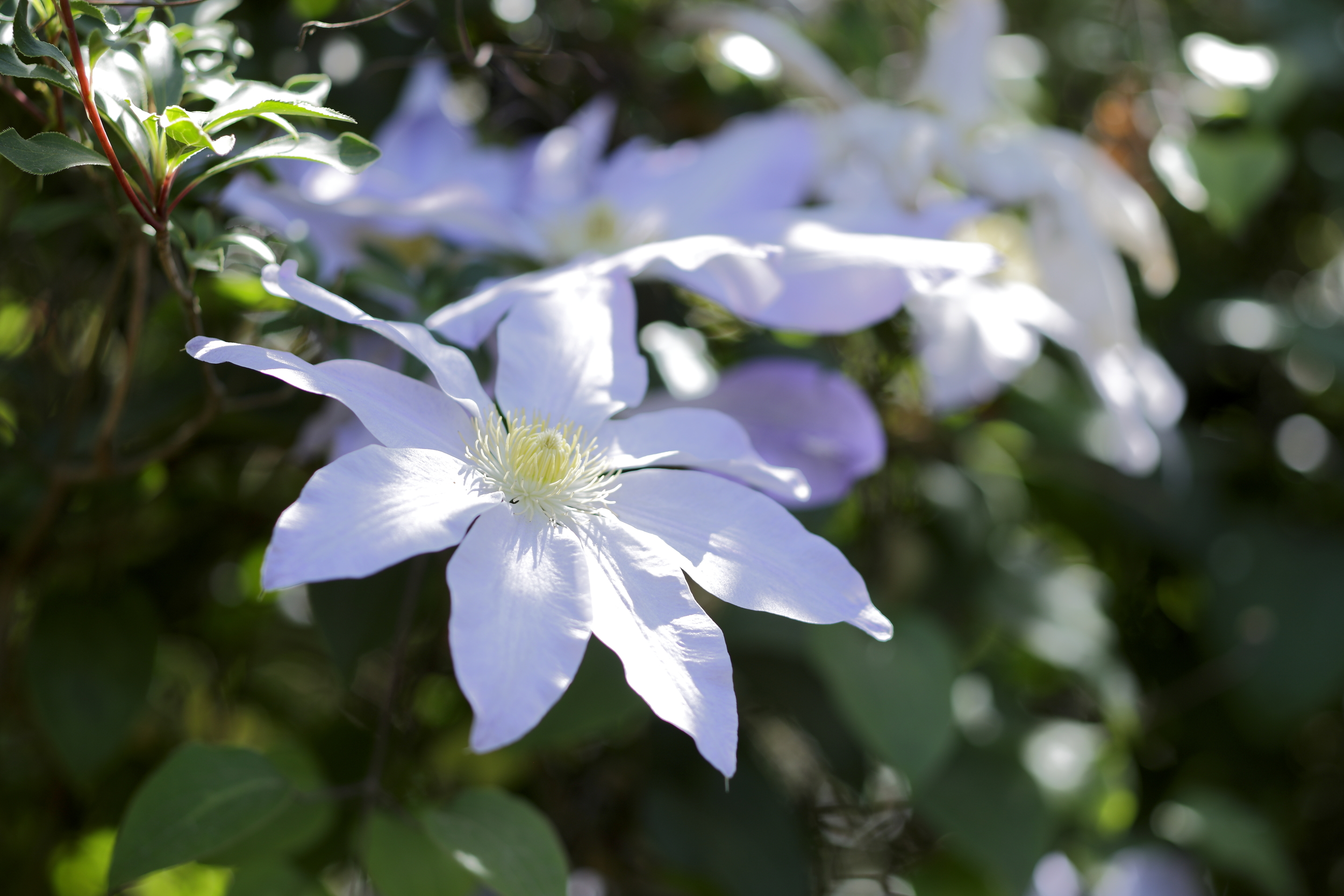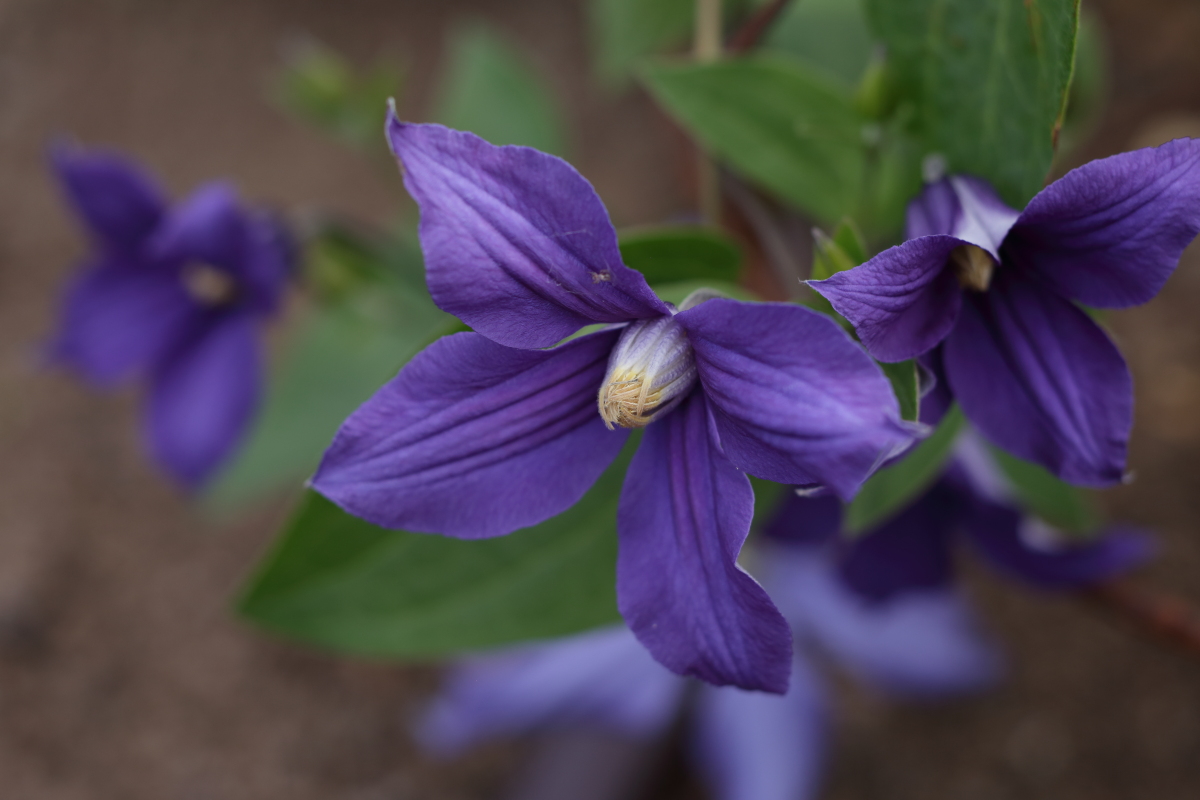
Now that the clematis have been moved entirely to Luscher Farm, we begin the task of garden building. We already have a test plot prepared, and will fill it with as yet unbloomed seedlings and volunteers from the collection, open pollinated plants we wish to evaluate, as well as seedlings with study names which have bloomed, but which have up to now only lived in a greenhouse. We hope that in the future nurserymen and plant breeders will avail themselves of the opportunity to have the collection test plants for them.Brewster continues to advise the Friends group, and is at the collection at least one afternoon per week. His vision continues to fade, but not his spirit. Currently he is helping to develop a new soil mix for cuttings, and planning which plants to propagate.
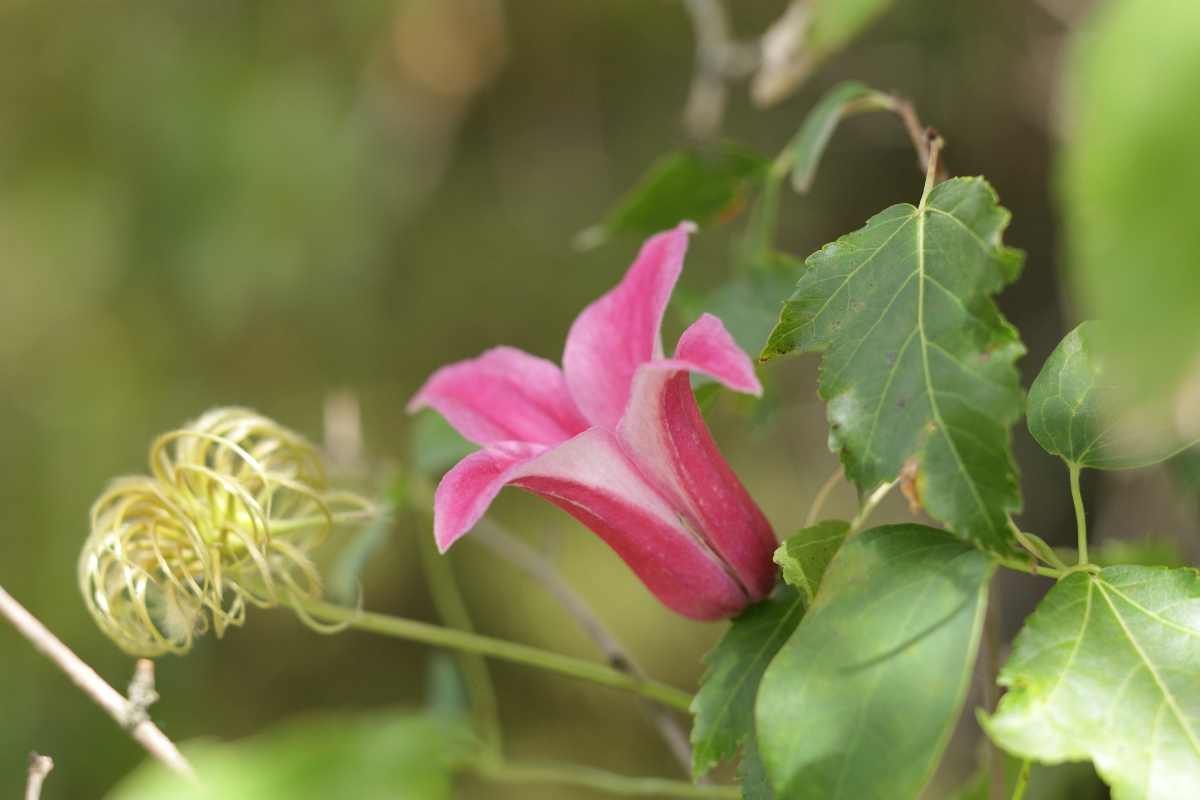
The garden design team has completed the plans for the first phase of the display gardens, which will include clematis, roses, and cottage garden shrubs and perennials which might have been available to the family that built the farm house in 1900. Brewster has selected over 100 clematis from the collection which will be appropriate for this phase. But the first step, as often happens in building a new garden, is removing old plants not needed, and digging and storing existing plants we want to keep but which might be damaged as paths and beds are installed. Last weekend three volunteers dug and potted 25 vintage peonies so that they will be out of harm’s way. We don’t know what colors they are, but oh well! These will be replanted in a sunnier location than their former bed, which will become a pathway. On April 27th the huge ugly holly tree is scheduled for removal, and everyone will be glad to see it go!
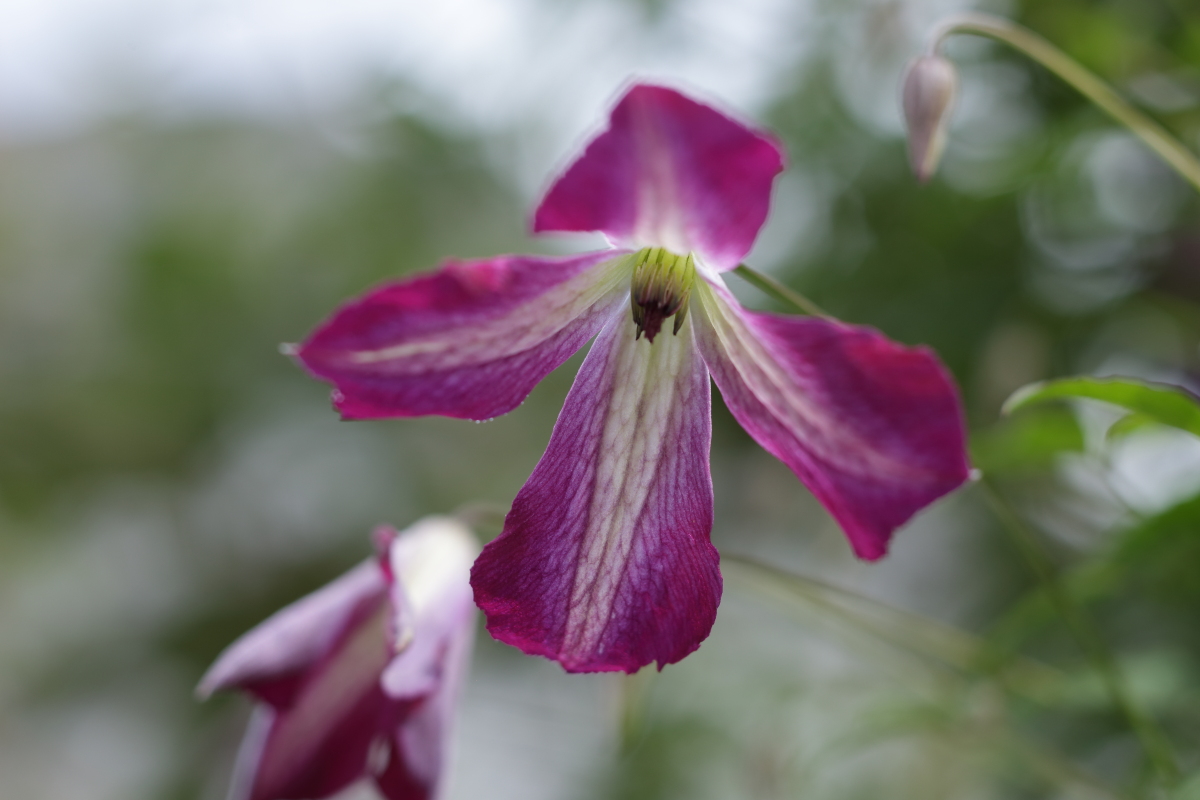
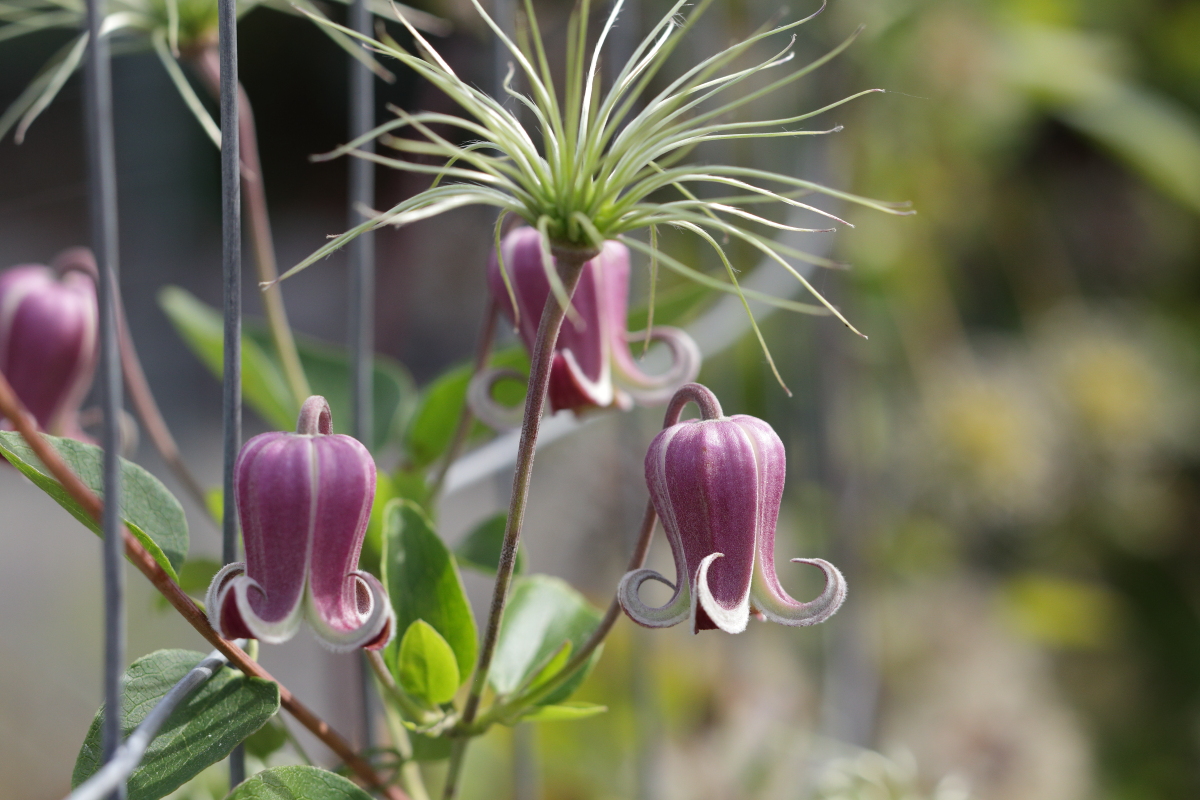
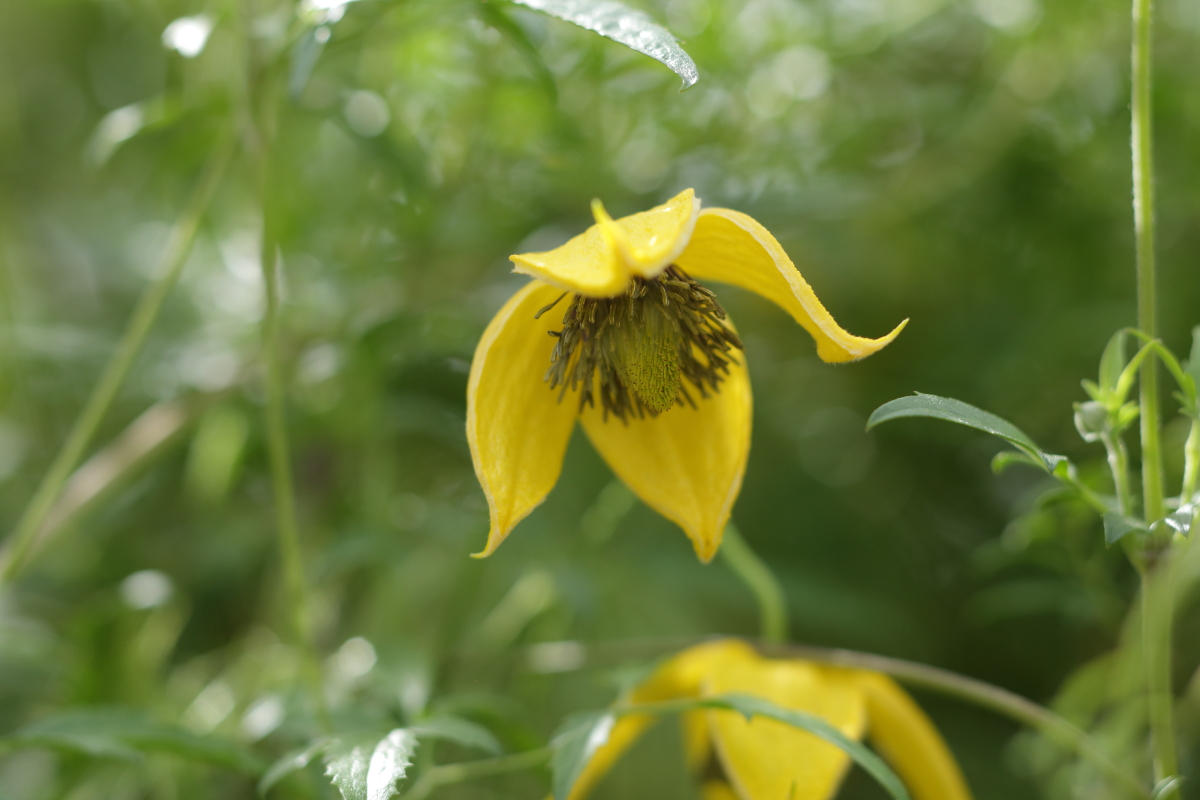
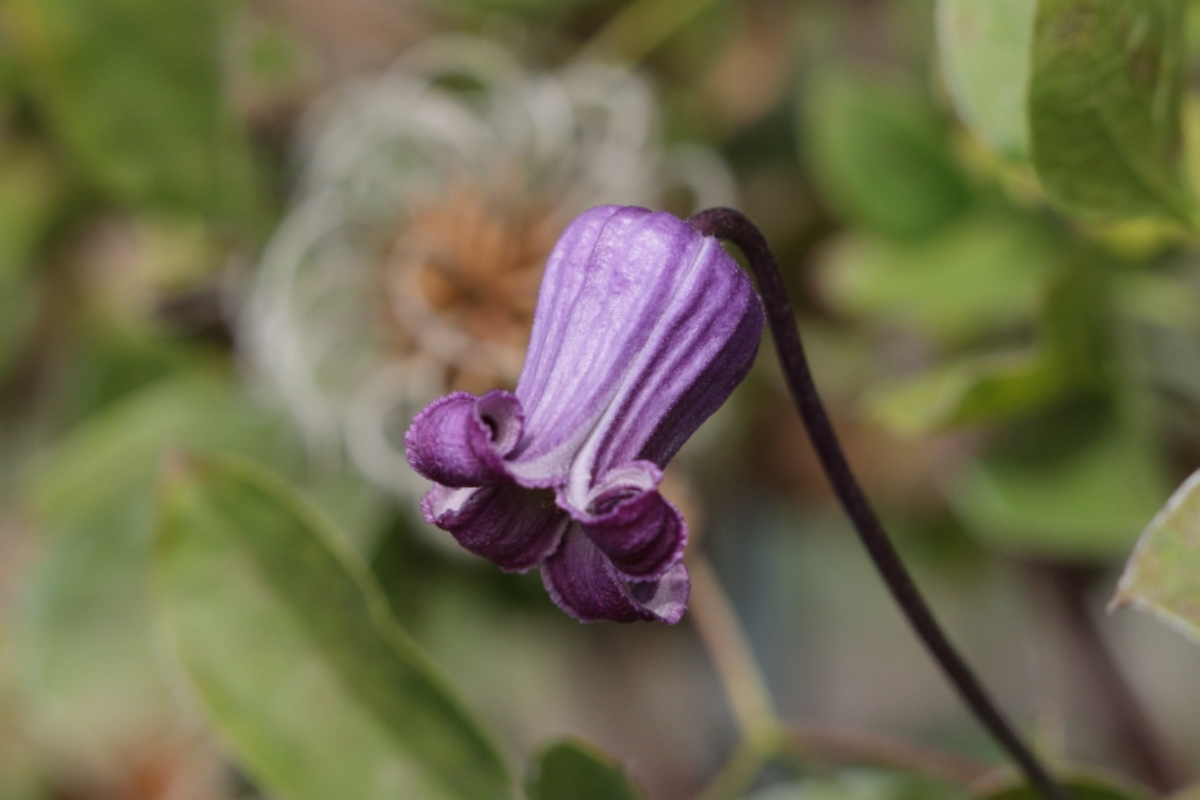
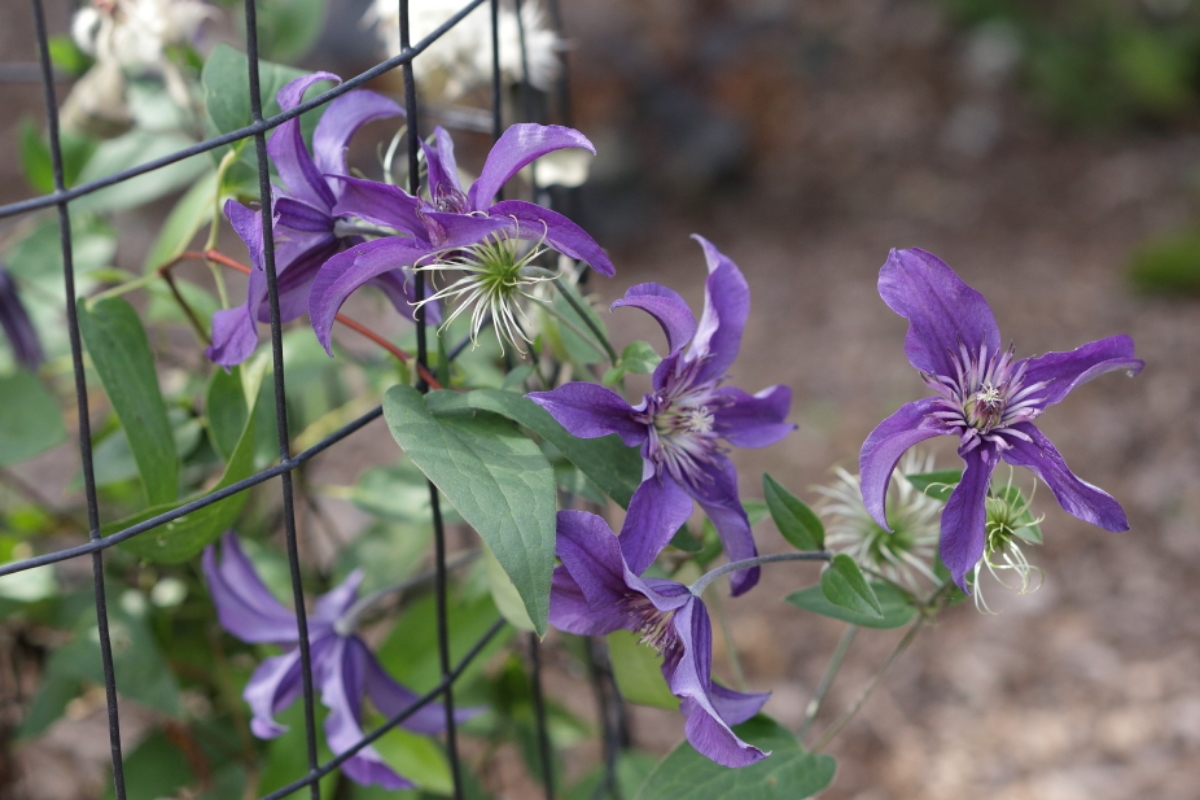
The atragenes, which spent the winter in pots outside the greenhouse, look better than ever and are bursting into bloom, including several seedlings we hope to name and propagate. Many of the stock plants were purchased by Brewster from Magnus Johnson, and these are given special care and pride of place. In some cases, Brewster may be the only person in North American to have acquired certain cultivars, and we want to make them more widely available. Especially popular with visitors is ‘Campanulina Plena’, now known as ‘Clochette Pride’, and we plan to propagate this for sale at the collection. Hopefully we can raise enough money selling plants to support the acquisition of replacement plants and new cultivars.
Share on Facebook