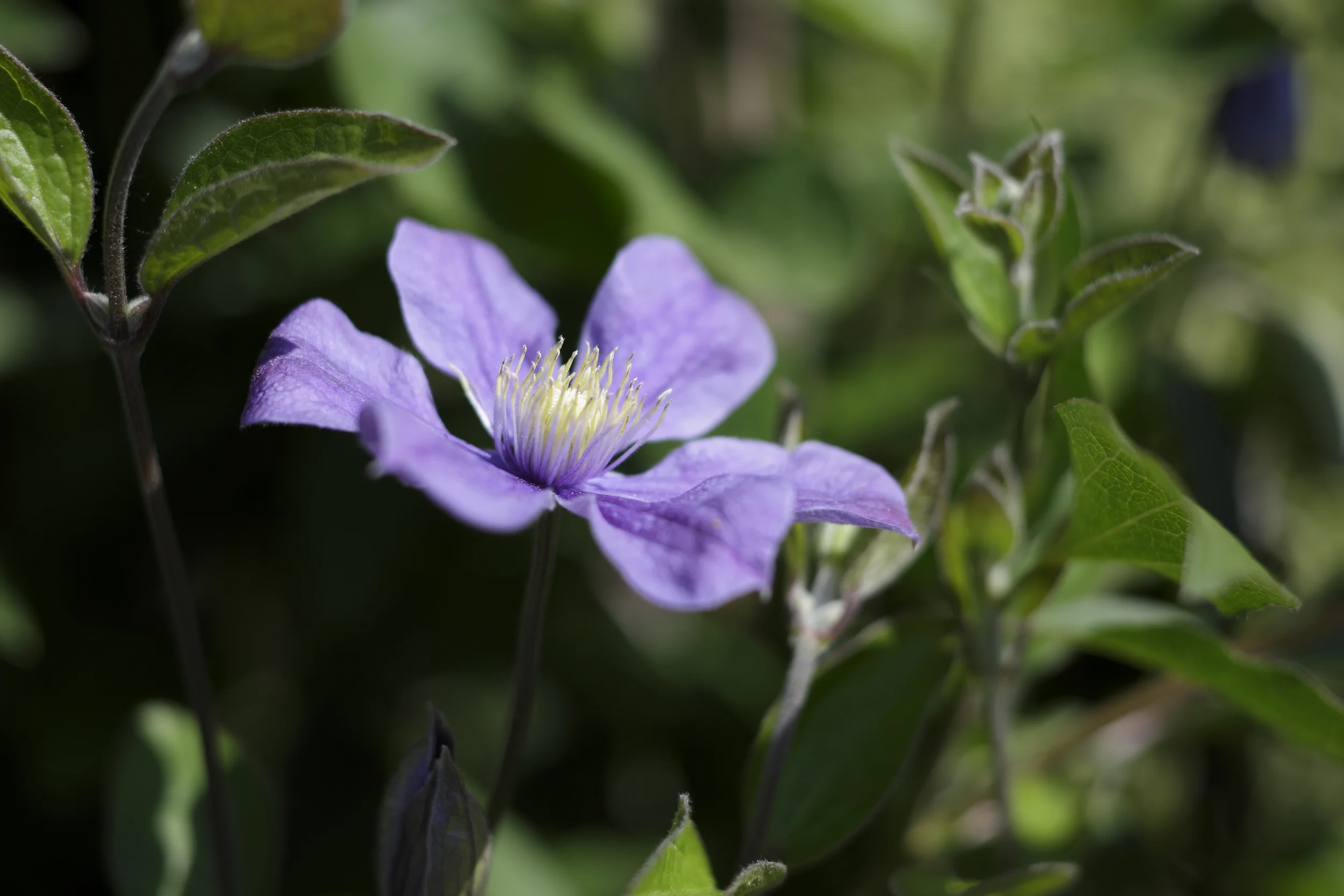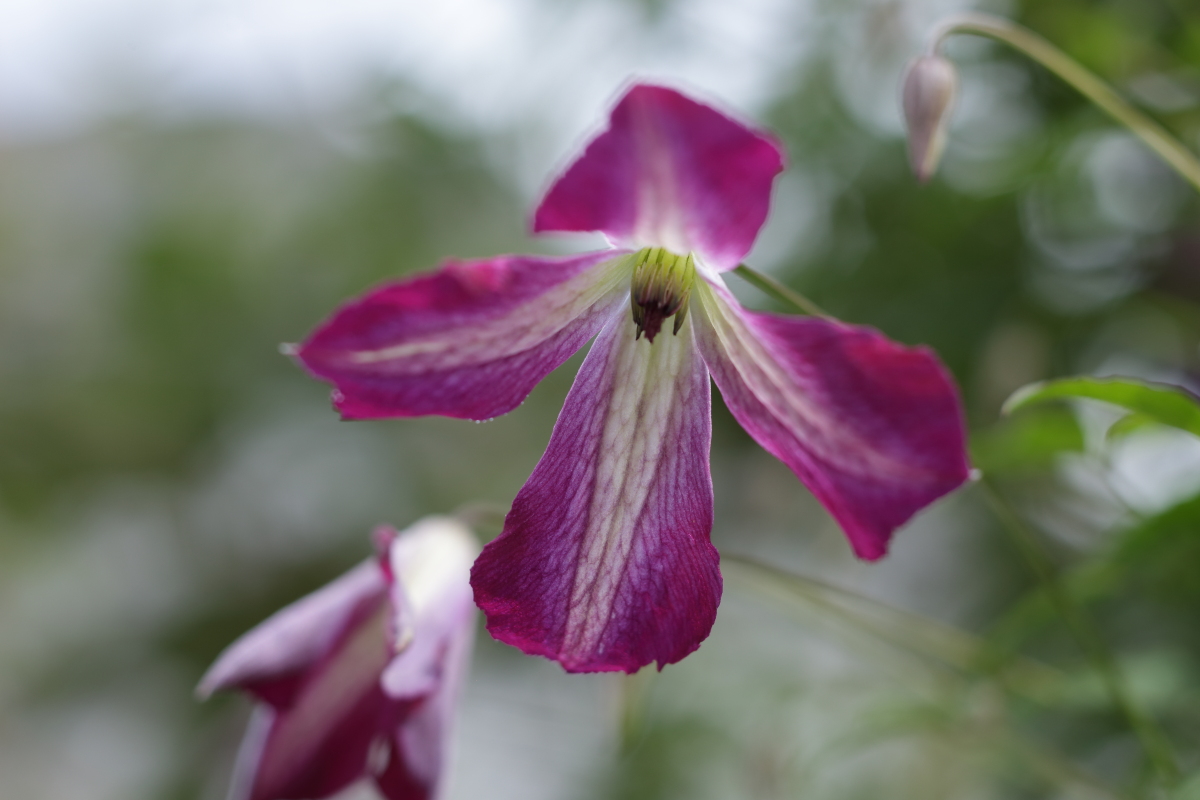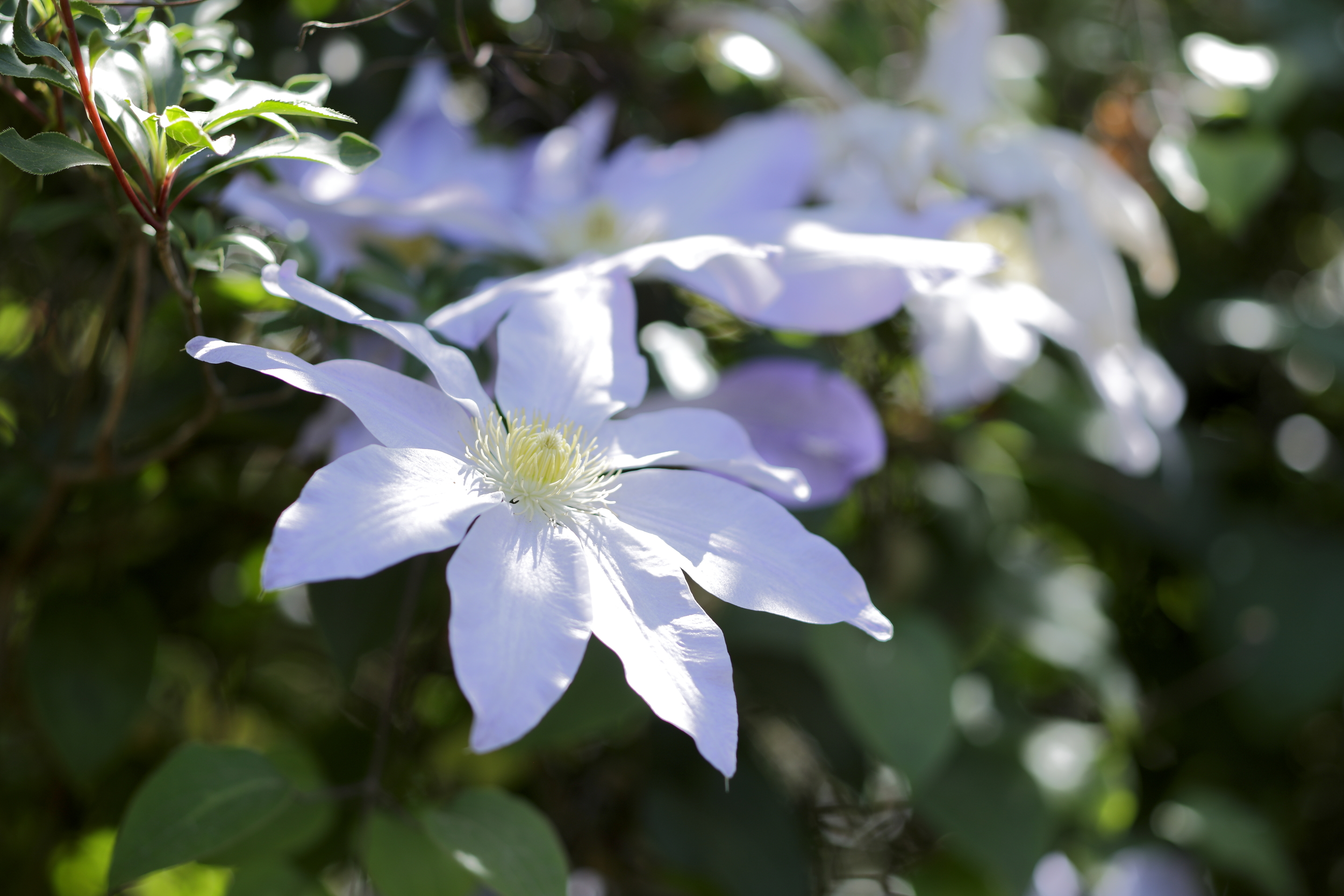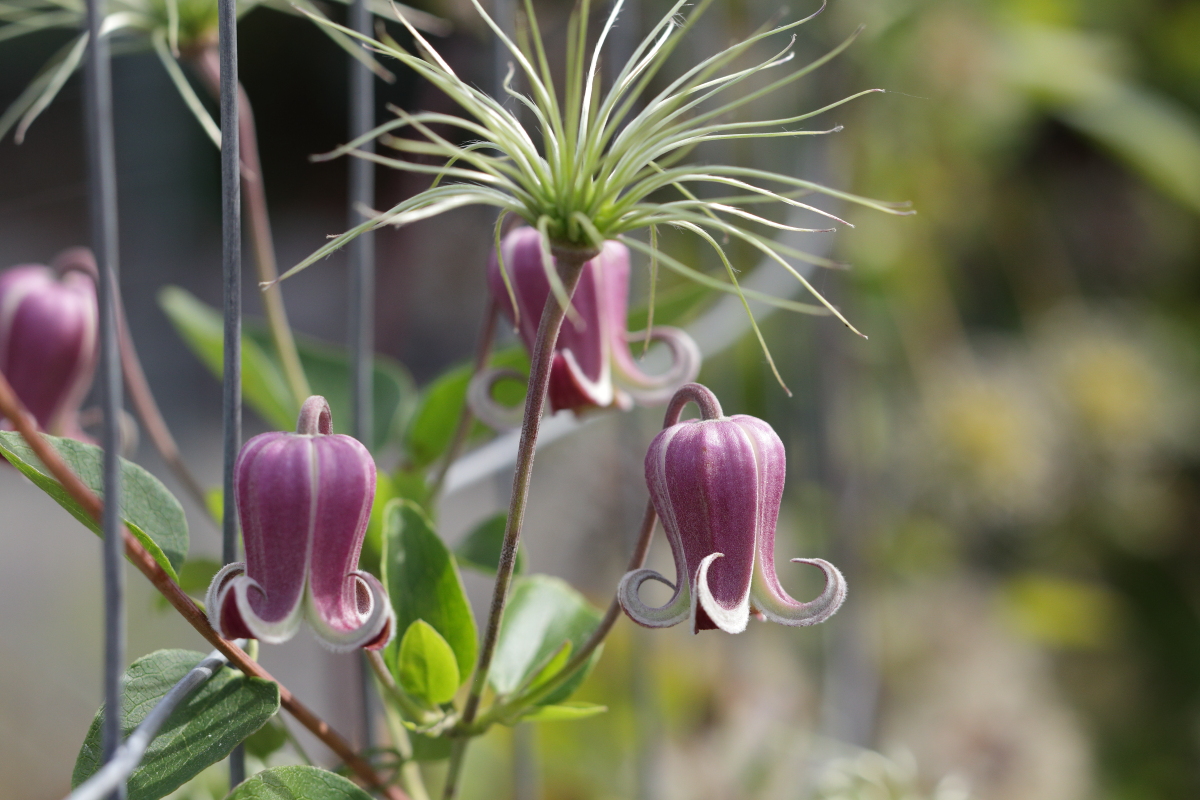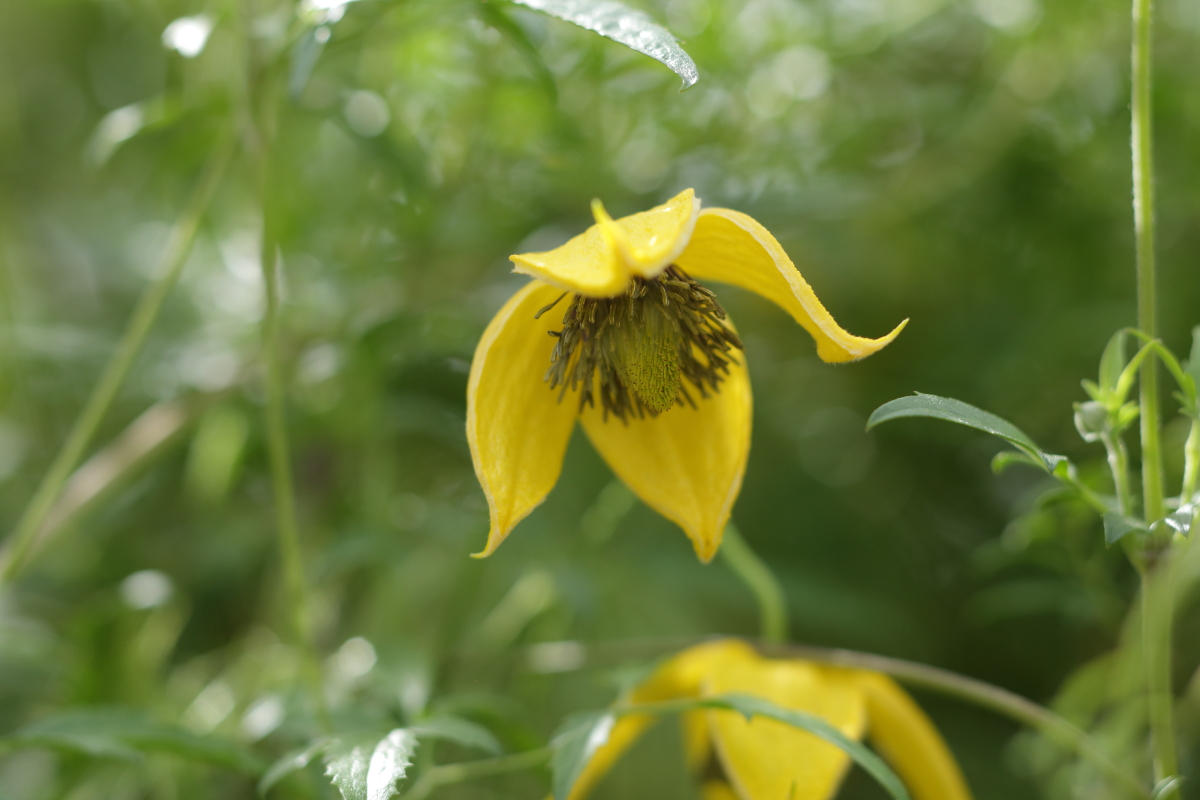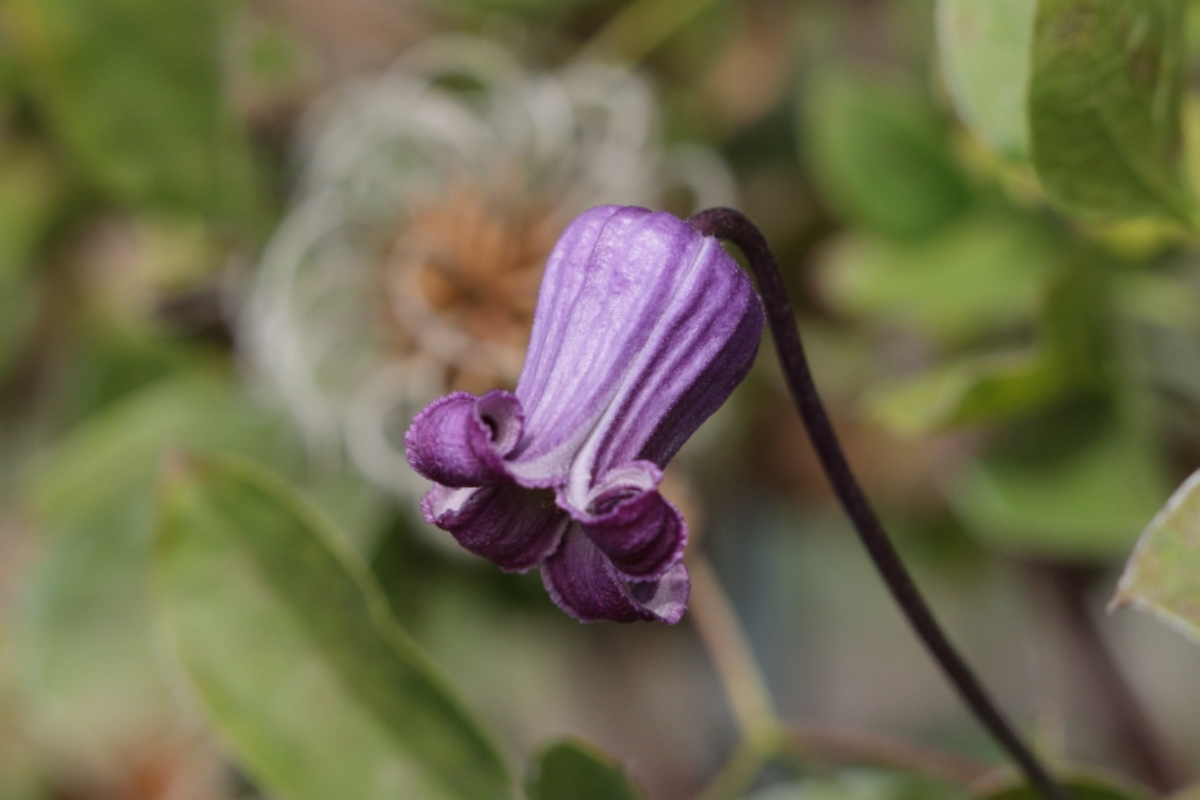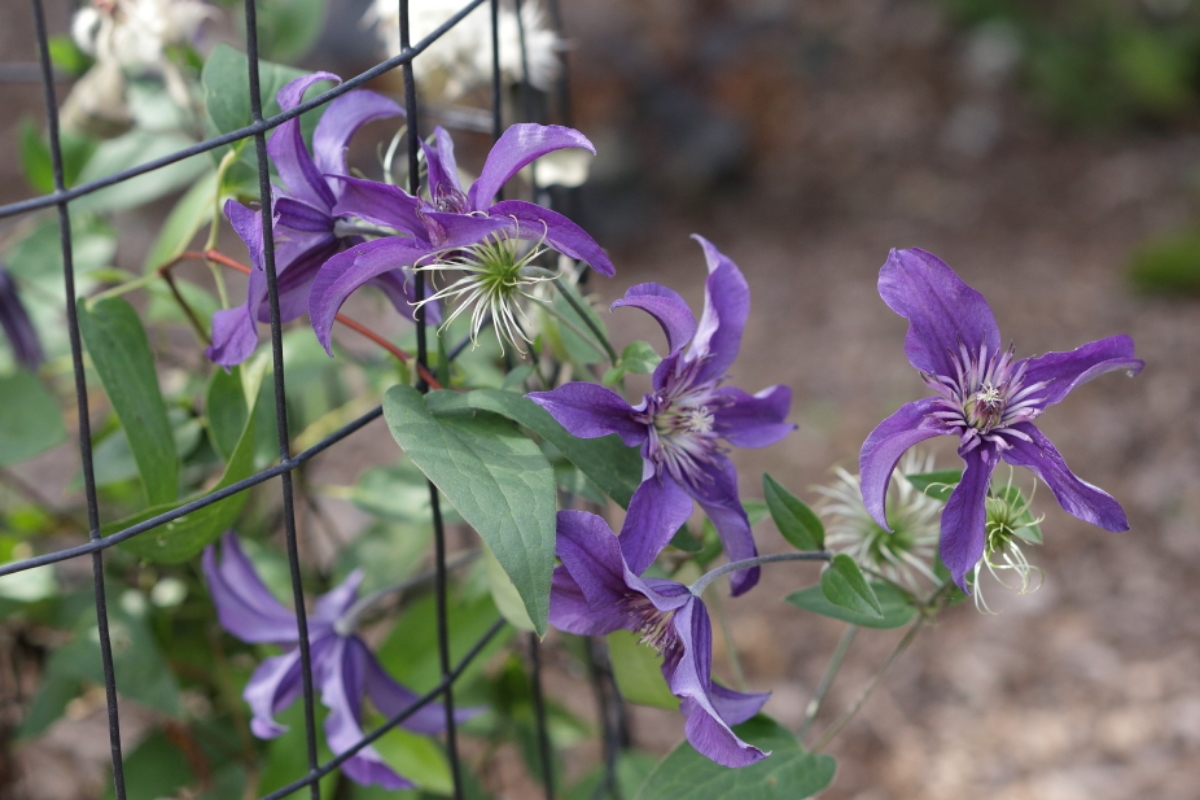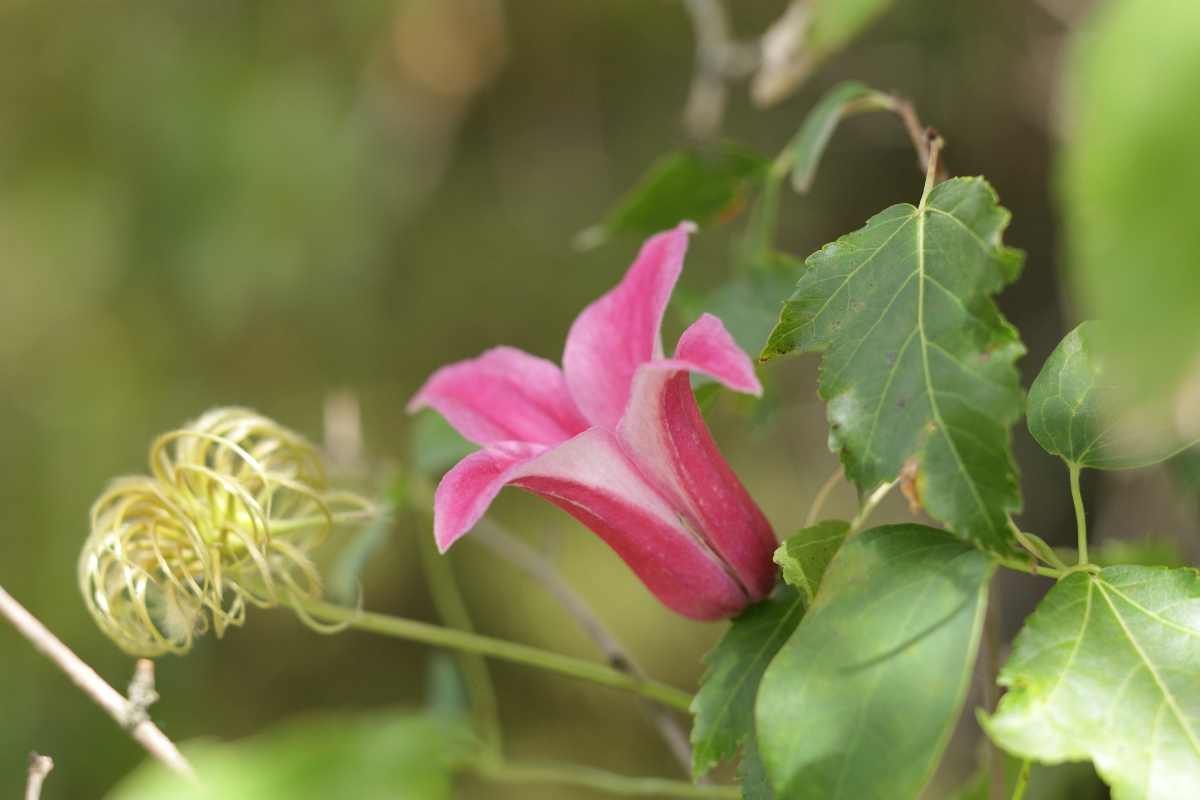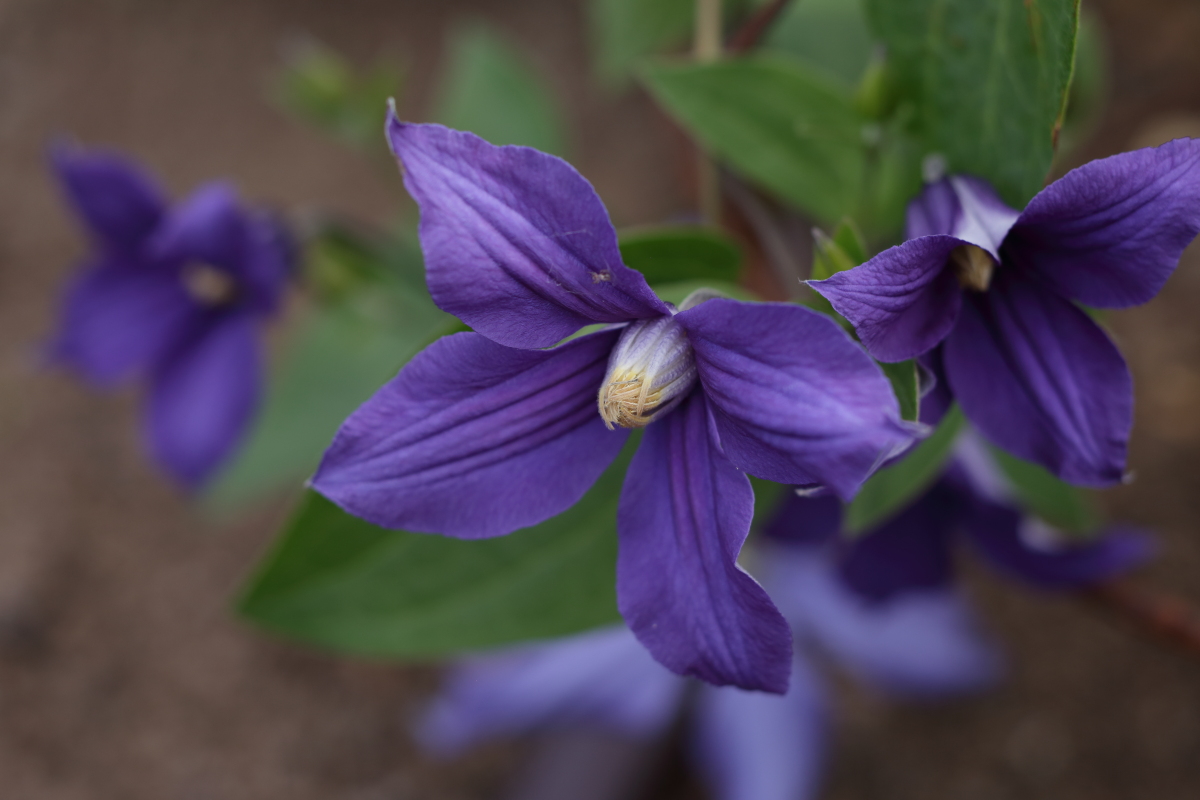
Big “Clematis Cheers” go to Phyllis McCanna and Rick Meigs, as well as our other random waterers, for getting our fence-row planting of Clematis montana cultivars and plants of Clematis crispa through their first summer, which was unusually hot and typically dry. With the on-set of our first rains I checked the plants today, and most are not only surviving, they are thriving! One of the crispas was covered with seeds, and the other is starting into what looks to be an enthusiastic bloom cycle. The C. crispa plants were selected to go into the two slowest-draining planting holes, its common name being “the marsh clematis”. In the wild, this species is the only one to prefer boggy or seasonally flooded sites.
By far the most vigorous plant on the fence is C. montana var. rubens ‘Warwickshire Rose’, which clearly would love to be a groundcover, but I have strapped it onto the fence, and the plant already has a seven foot spread. We are of course happy to report that the two C. ‘Brewster’ plants are looking well, and that seems to hold true for the man himself!
Clematis spooneri and C. ‘Continuity’ were looking sad, but their dead wood has been removed, and both still have green stems and I think are likely to revive. These plants have had it rough. A leak in the sprinkling system for the lawn in front of the farmhouse was sending a geyser of water onto the public pathway that skirts Luscher Farm and adjoins the clematis collection area. This water then drained right onto our fence posts and plants. Rick and Phyllis couldn’t reckon why the first three clematis on the fence were always soggy! Fortunately a Lake Oswego maintenance worker discovered the water jet early one morning, and the problem was promptly fixed. Interestingly, C.’Jenny Keay’ was unbothered by the whole affair.
All were fertilized today–the last time for this year–and groomed. Now we need to decide which clematis will go on the unoccupied fence posts, to give the fence some summer color while the montana forms rest. Please send suggestions to clematis@ipns.com. Perhaps summer-blooming large-flowered hybrids?
Share on Facebook