Inviting Vines 2026
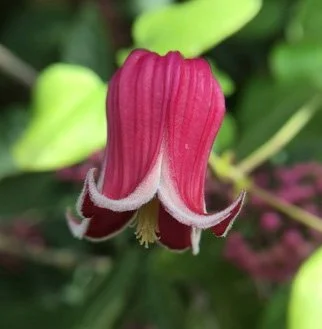
Celebrating the Art & Science of Clematis
Friday, June 12 | Saturday, June 13 | Sunday, June 14
PURCHASE TICKETS HERE!
FRIDAY
At Mary’s Woods (7:00 PM)
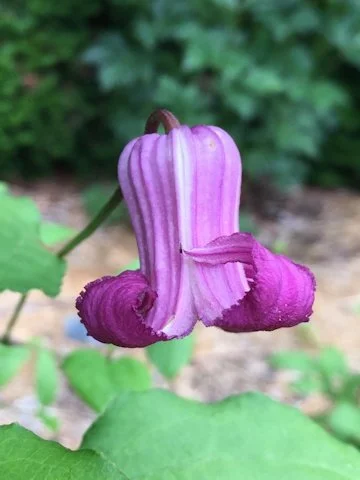
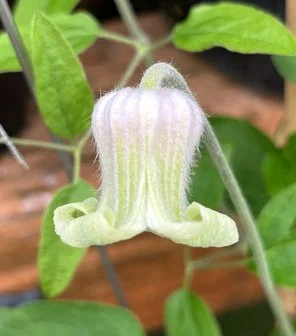
Enchanted by Small Bell-Shaped Clematis, presented by Tomoko Chikuma
Raffle for plants from Gossler Farms, Monrovia, N&M Nursery, Stafford Ridge Nursery and Rogerson Clematis Garden’s Collector’s Corner, together with gift certificates from the Portland Nursery.
Buy a ‘Golden TIcket’ for a chance to win a newly introduced clematis cross developed at Joy Creek Nursery. Winner to be drawn on Saturday at 3:00 PM. Purchaser does not need to be present to win.
SATURDAY
At Mary’s Woods (9:30 AM‒noon)
The Blue Ridge Mountains and Beyond: In Search of Species That Inspired a New Look in Clematis, keynote by Cole Burrell
Flower Arranging with Clematis, demonstration by Tomoko Chikuma and Robin Sonoda
Raffle for plants from Gossler Farms, Monrovia, N&M Nursery, Stafford Ridge Nursery and Rogerson Clematis Garden’s Collector’s Corner.
Buy a ‘Golden TIcket’ for a chance to win a newly introduced clematis cross developed at Joy Creek Nursery. Winner to be drawn at 3:00 PM. Purchaser does not need to be present to win.
At Rogerson Clematis Garden (10:00 AM‒4:00 PM)
Clematis Propagation Techniques, presented by Mikiyoshi Chikuma (1:00‒2:30 PM)
Herbaceous Perennial Clematis Division, presented by Linda Beutler (3:00-3:45 PM)
Guided tours of the Garden with our volunteer docents (open to the public)
Sales Terrace ‒ purchase a beautiful clematis or two for your garden!
Vendors (open to the public, no ticket required) ‒ Bartlett Tree Experts, Van Hevelingen Herb Nursery, Sundial Urban Gardens, Steelhead Metalworks
Drawing for ‘Golden Ticket’ winner at 3:00 PM. Purchaser does not need to be present to win.
Sunday
On Sauvie Island (12:00‒5:00 PM)
Visit four private gardens and two nurseries.
all tickets are non-refundable
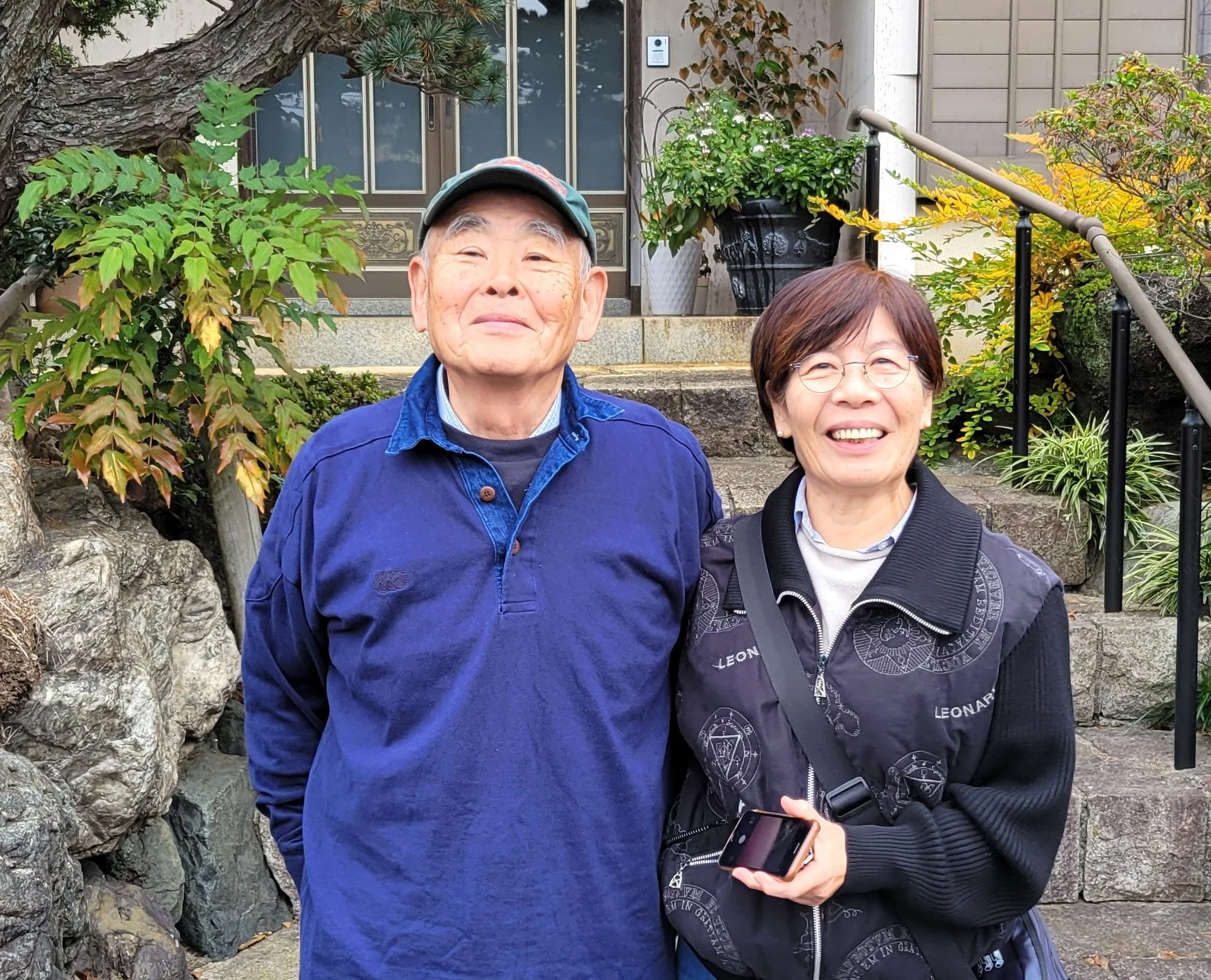
MIKIYOSHI & TOMOKO CHIKUMA
Mikiyoshi and Tomoko Chikuma were the owners of Chikuma Nursery in Kawasaki City, Japan. Mikiyoshi and his family ran the nursery for about 50 years. Originally, the Chikuma family raised rice in the Kawasaki area. As that area grew more crowded and industrialized, the quality of the ground water worsened, and they had to discontinue rice farming. The family then turned to growing flowers for the cut-flower trade and eventually began growing clematis under the tutelage of Mr. Kazushige Ozawa, Mikiyoshi’s uncle. First, they grew large-flowered clematis but later switched to small bell-shaped varieties. After Mr. Ozawa’s death, Mikiyoshi and Tomoko maintained his uncle’s collection and, following in his footsteps, the two began to develop their own hybrids.
Tomoko worked at Honda Motor Co., Ltd., for over 15 years after graduating from Sophia University in Tokyo. She has shared her husband's enthusiasm for small flowered clematis throughout their 30 years of marriage.

C. COLSTON BURRELL (COLE)
C. Colston Burrell is a lecturer, garden designer and photographer. The author of 12 gardening books, Cole has twice won the American Horticulture Society Book Award. Cole is an avid and lifelong plantsman, gardener, and naturalist. He is a popular lecturer internationally on topics of design, plants, and ecology, sharing his knowledge and enthusiasm with professional and amateur audiences for 45 years. He escorts garden and natural history tours throughout the United States and abroad through Garden and Nature Tours with C. Colston Burrell. He is principal of Native Landscape Design and Restoration, which specializes in blending nature and culture through artistic design. In 2008 Cole received the Award of Distinction from the Association of Professional Landscape Designers for his work promoting sustainable gardening practices. His work is part of the Smithsonian Archive of American Gardens. He gardens on 12 wild acres in the Blue Ridge Mountains of Virginia.
FLICKER FARM GARDENS
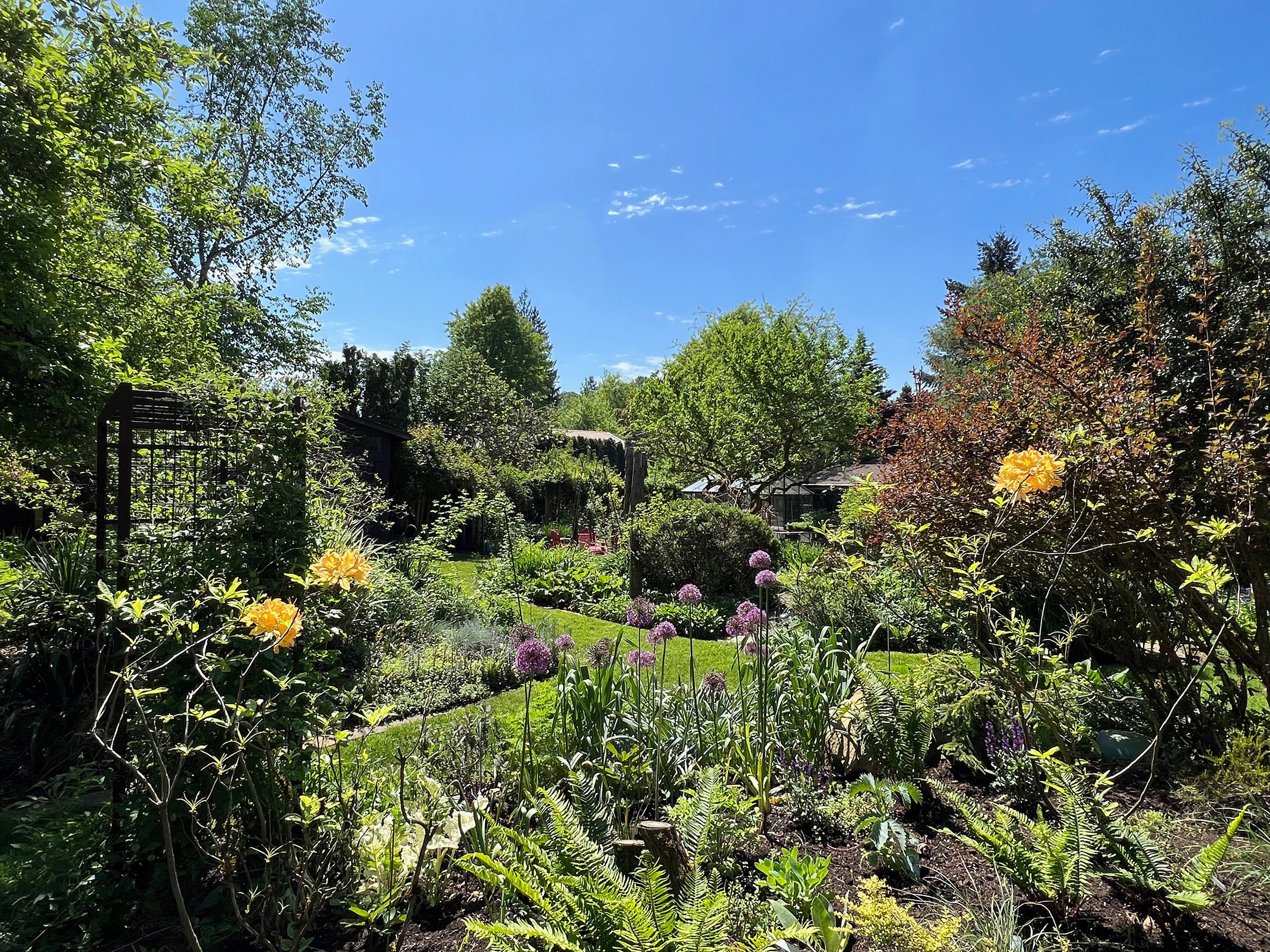
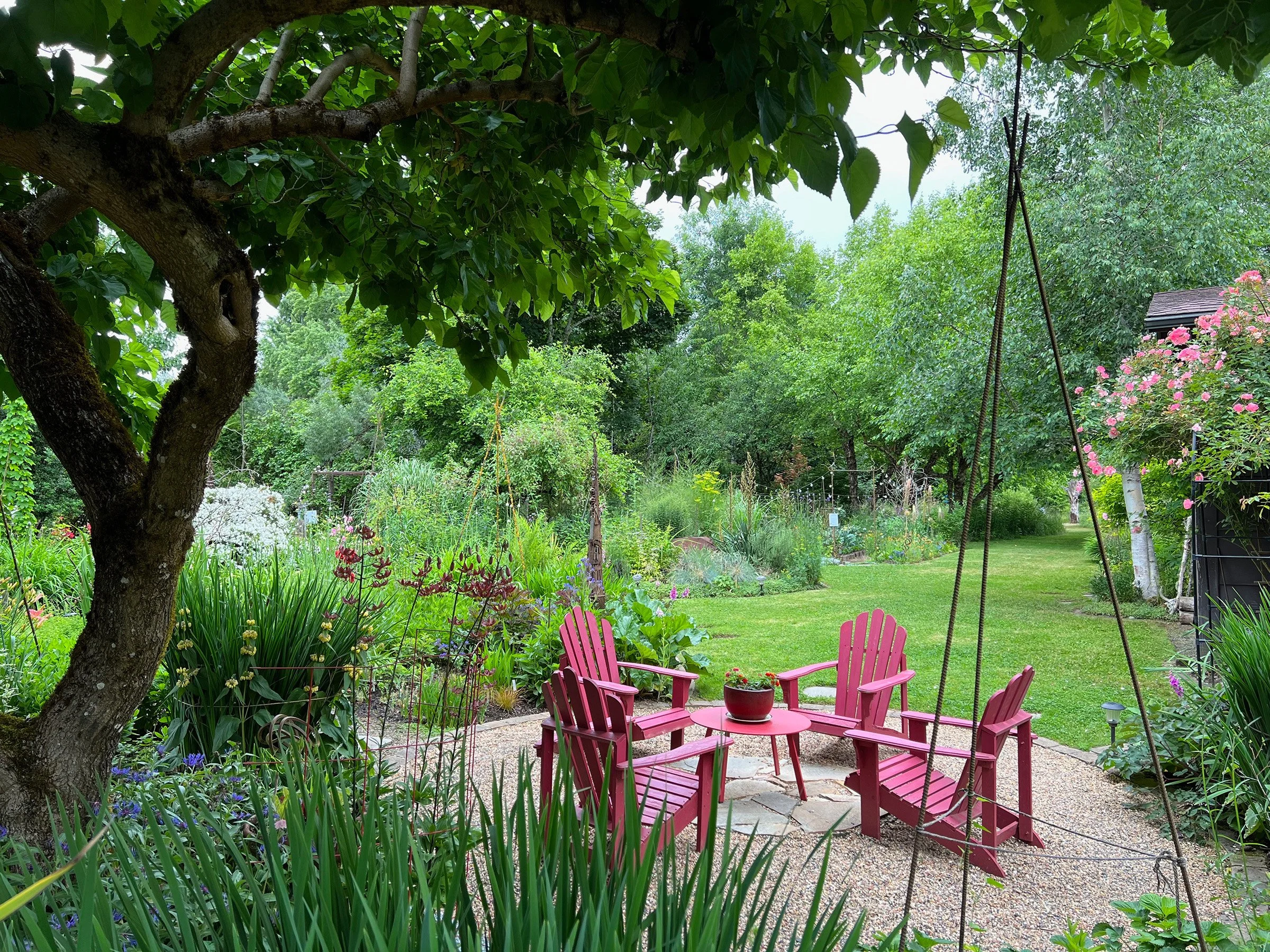
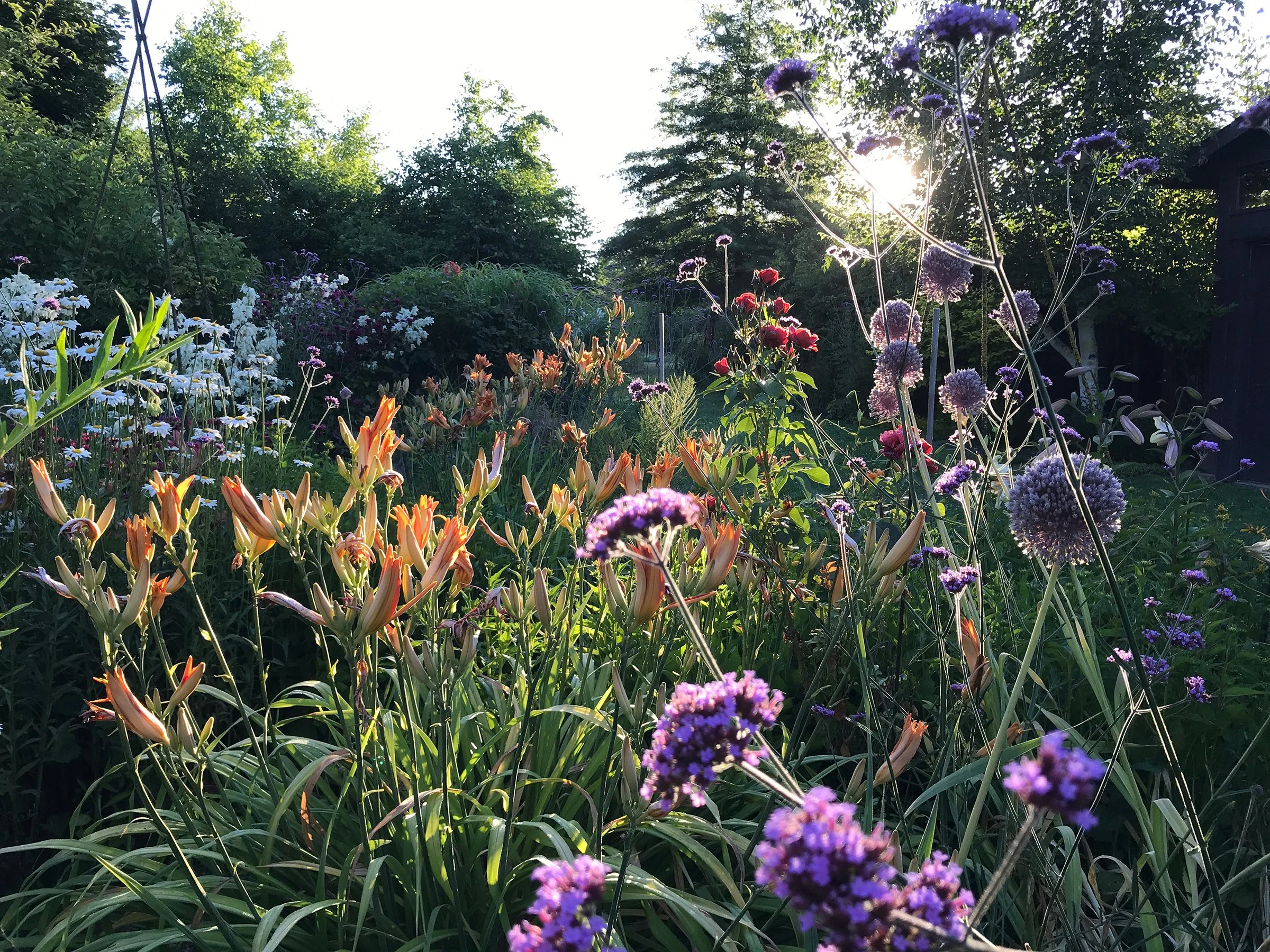
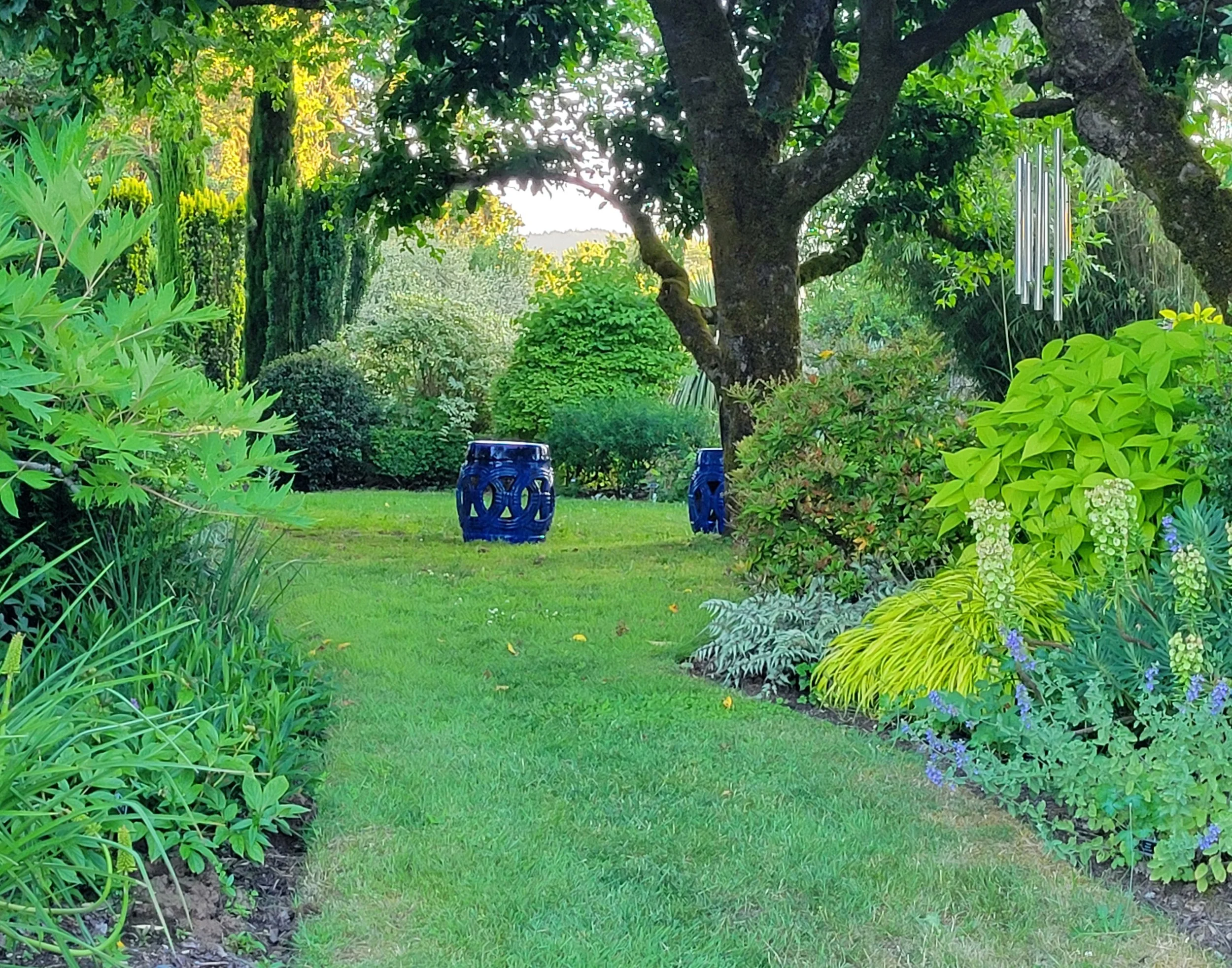
Explore the gardens at Linda Wisner and Chet Orloff’s 1.3-acre Sauvie Island home. Walk through metal gates sculpted by Ray Huston into the magical world of Flicker Farm, the heart of which is a Mediterranean-meets-Pacific-Northwest grapevine-covered courtyard. Wander through the bird bath garden and on past berms, perennial borders, rocky xeric gardens, meadows, vegetable gardens, meadows and native plantings, and a dahlia bed in the orchard. Circle back past the barn, under a fig tree, along blueberry and strawberry beds and the bird-filled East Courtyard. Discover the purple door in a tall boxwood hedge that leads to the front woodland gardens where ferns and other shade loving plants abound. You'll also find plenty of places to sit a while, from a dry-stacked stone bench in front, to a cluster of Adirondack chairs under the contorted mulberry, to the Heritage birch grove.
Accessibility: The property is flat. The gardens are accessible on gravel or wood chip paths and across mowed lawns. Parking will be along the road and across the road in a neighbor’s meadow. It can accommodate 15-20 cars. Overflow will need to park about 1/8 mile away at the boat launch ramp parking lot on Ferry Rd.
LOST LAGOON FARM | SAUVIE ISLAND NATIVES NURSERY
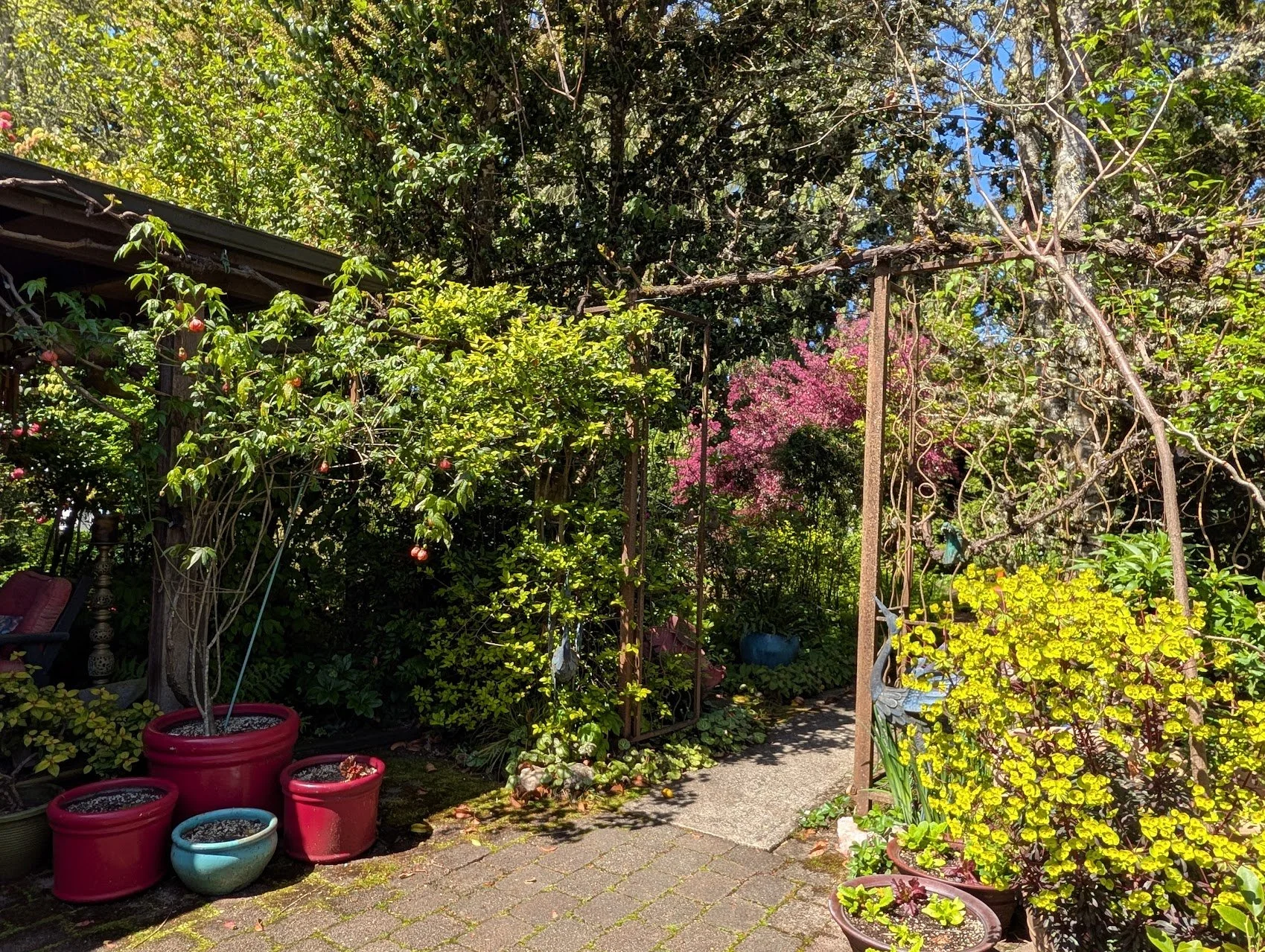
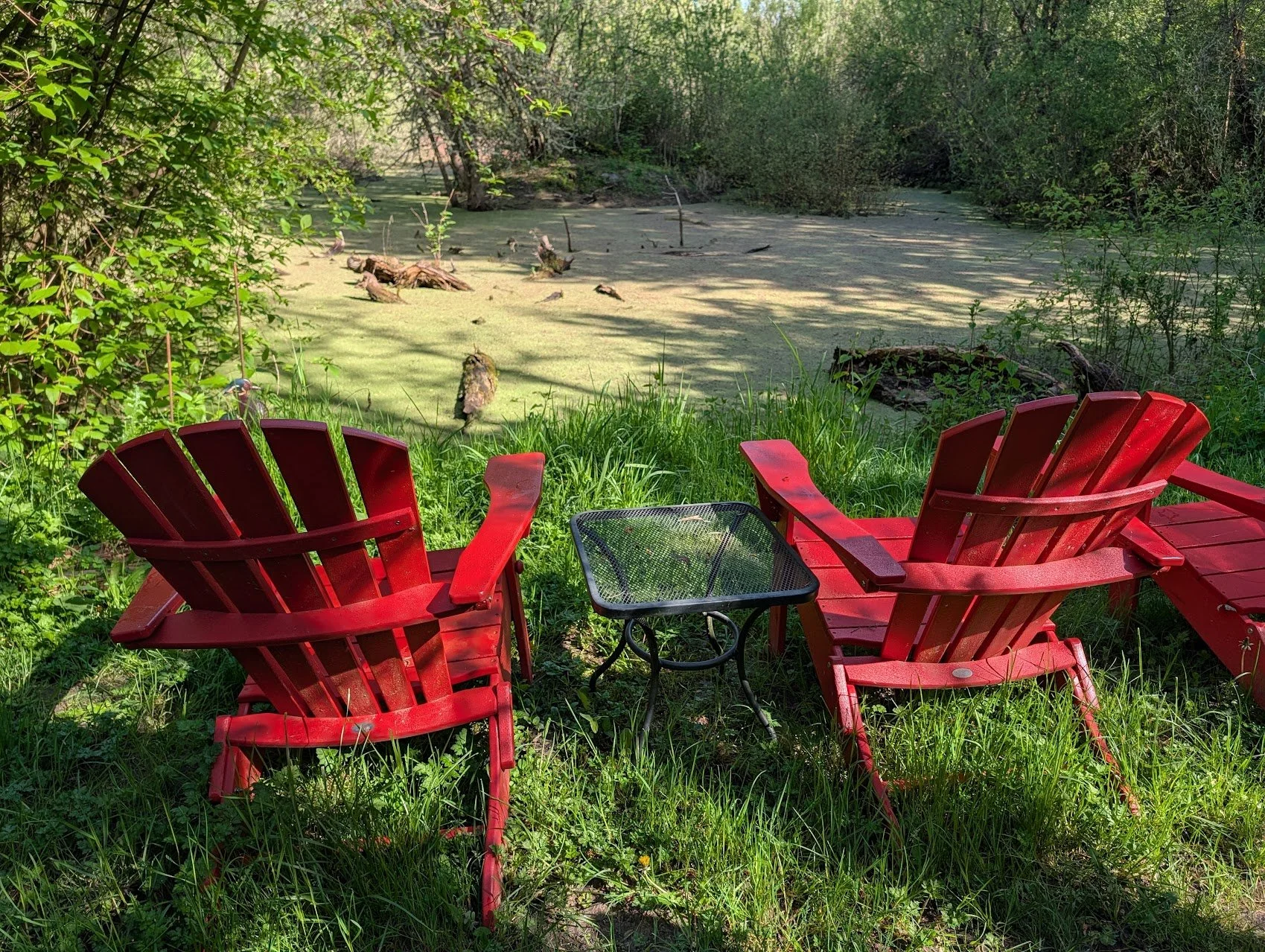
See what happens when a botany nerd (Jane Hartline) and a seasoned gardener (Mark Greenfield) create an arboretum of Oregon native flowers, shrubs, ferns, and trees! Pathways lead around a large pond through various plant communities and micro-ecosystems ‒ a fern glade, an oak savannah, a coniferous forest, and a Willamette Valley prairie. Signage explains various gardening practices that attract more birds and wildlife. As a bonus, you are welcome to visit the nursery to take home native treasures of your own.
Accessibility: The front of the nursery is accessible by wheelchair, but narrow paths once inside make it difficult to negotiate. However, the plants can be brought to you for a closer look. There are chairs near the pond with a lovely view that could be accessed by a sturdy wheelchair. The path around the pond is more challenging.
SOULE/HORN GARDEN
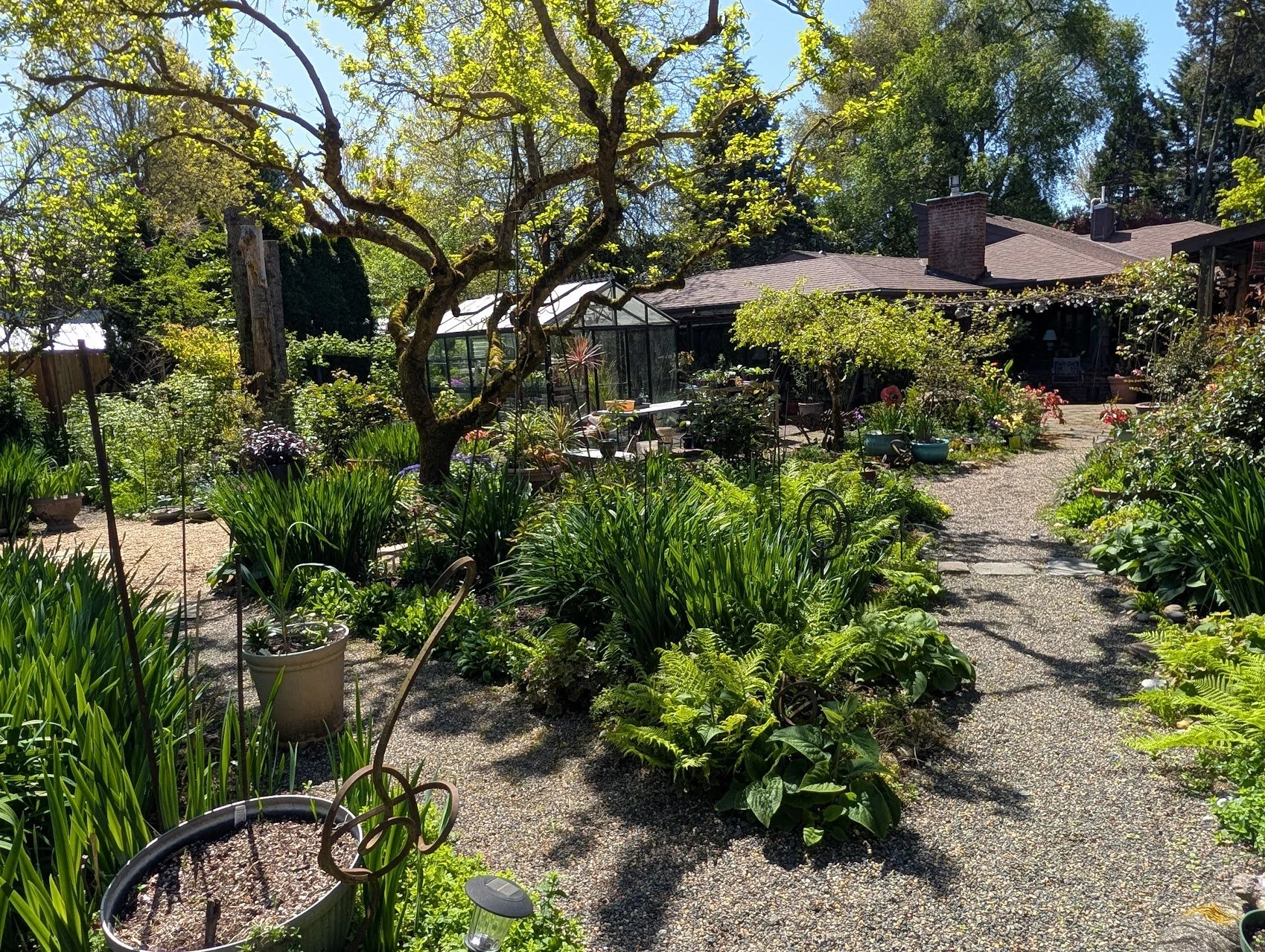
Located just 13 miles downriver from Portland, the garden of George Soule and Maurice Horn nestles in a remnant of oak savannah on Sauvie Island with views of Mount St. Helen to the east and the Tualatin Hills to the west. The hilly, 10-acre site is hugged on the west and south by Wapato State Park. This natural backdrop influences how they garden. They welcome both our native flora and fauna.
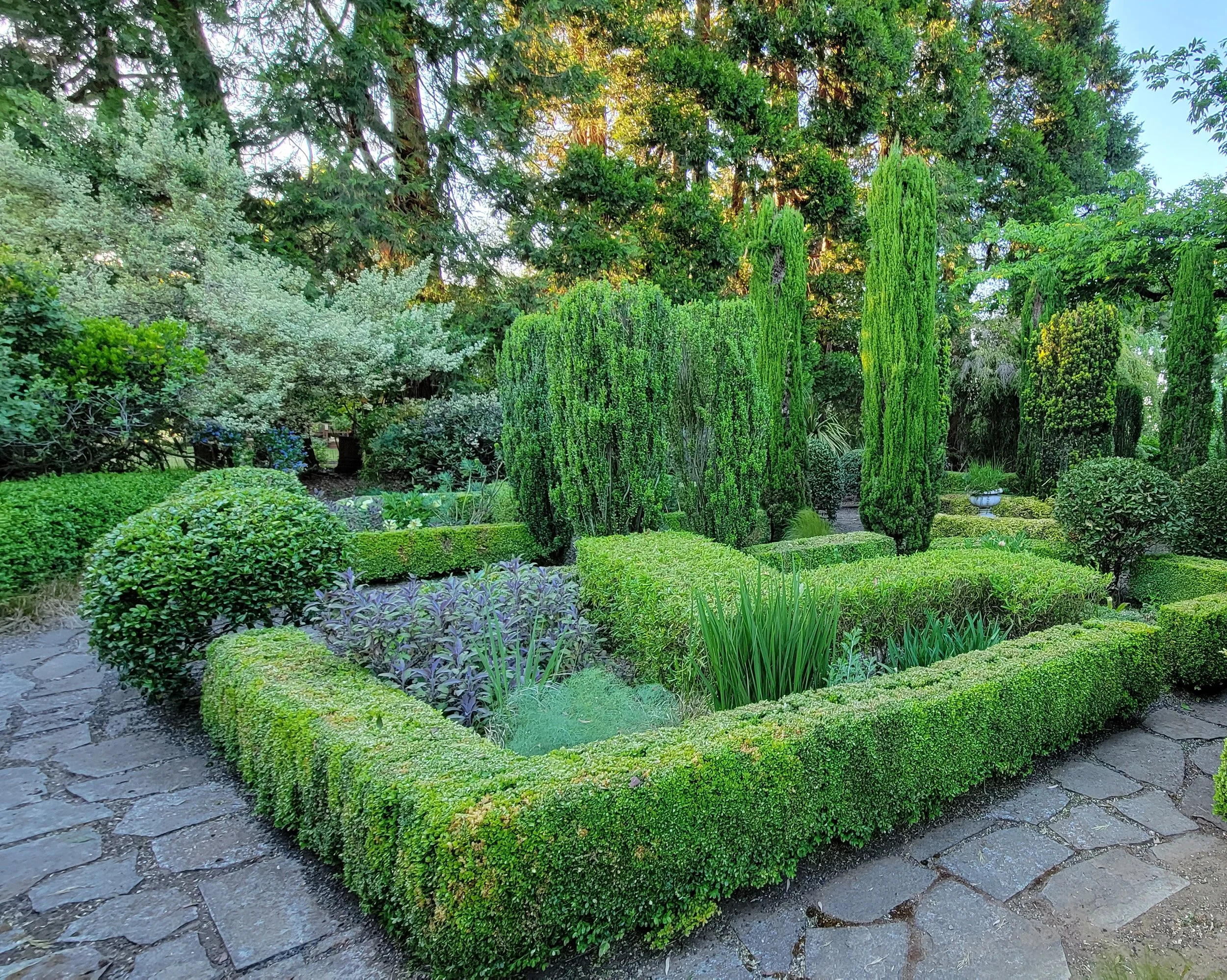
The garden is a quarter-century old. A formal knot garden beside the house anchors the ornamental beds. From there the borders look out to the park, a neighboring farm, and distant mountains. Collections of Clematis, Ferns, Daphnes, Hydrangeas, and Pieris are integrated into the design. A 240-foot berm created from fallen poplar gives the central garden a sense of privacy. The recent loss of eight Incense cedars has given new life to a formerly sunny border.
This is a strolling garden. You are encouraged to meander the mown paths along a Rhododendron border and through a Japanese Maple grove. Be sure to visit the fenced orchard and vegetable patch to see their collection of small-flowered Clematis.
Accessibility: Parking will be in the mowed fields at the side of an eighth-of-a-mile drive. The drive is only one lane wide so please be attentive to other attendees and to local wildlife. This is a country strolling garden with a 40-foot change in elevation. Comfortable walking shoes are recommended.
RANCHO CISTUS | CISTUS NURSERY
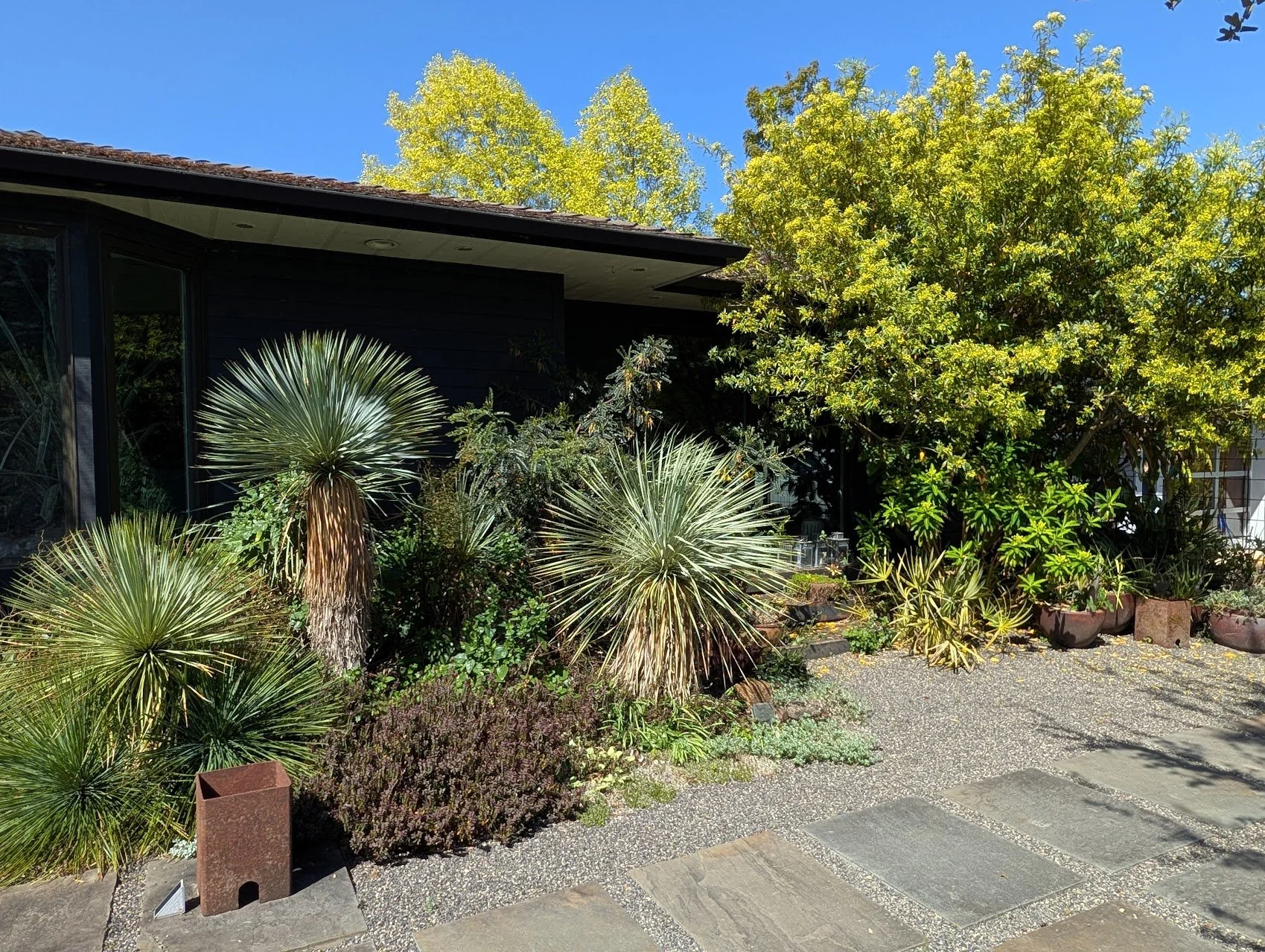
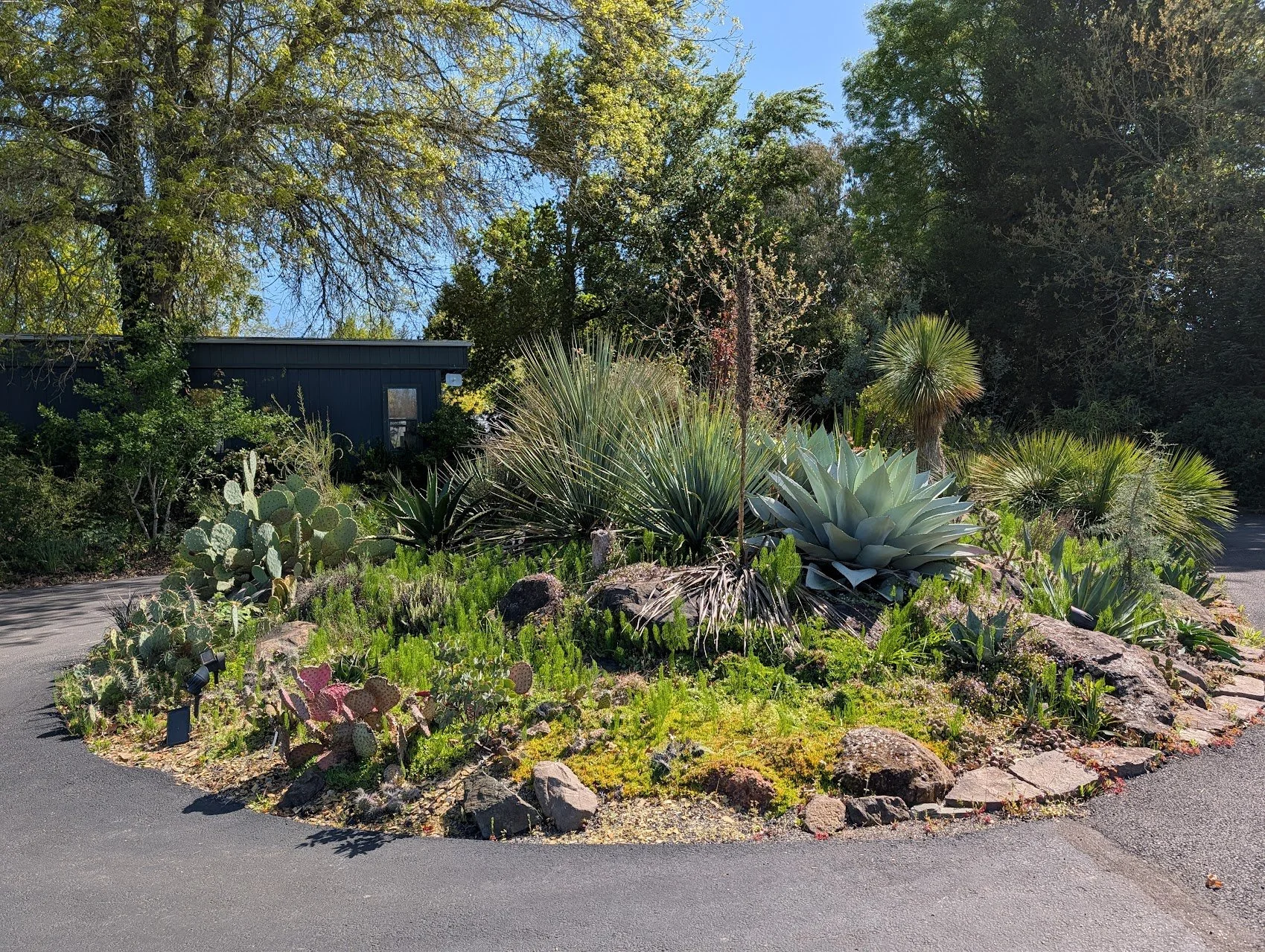
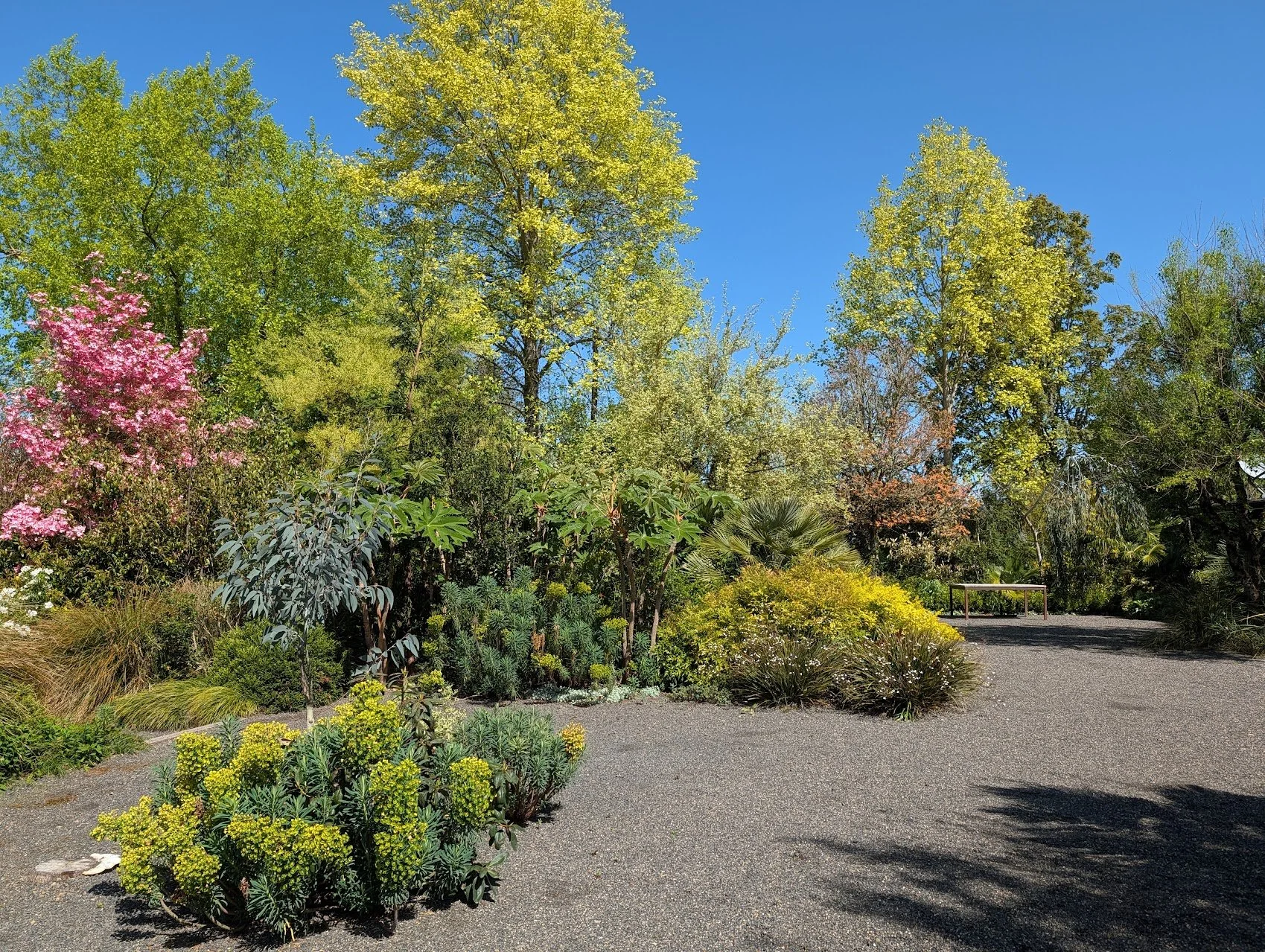
The garden of Sean Hogan and Preston Pew is part learning laboratory, part show garden, and also a source for propagation for their nursery. The garden comprises seven parts: the Rock garden (desert island bed) that is in the drive is mainly summer monsoonal or periodic drought plants; the Chaparral garden at the front with a mix of western natives and other Mediterranean climate plants; the Crevice garden is divided into different eco-geographic areas (for plants that need excellent drainage and cool soil); the Meadow garden with a mix of large scale grasses and bold textured perennials; and the Wedding Walk with Camellias, Mahonia, Pittosporum, and Hydrangea to name a few. The Terrace garden is an event space and features palms and other bold textured plants and many container specimens. The Figgery features a collection of 20+ fig cultivars and a collection of Oak and other woody species. We aim for no bare ground as we love to fill every place we can with plants and open spaces are just places where weeds can pop up. Rancho Cistus is a diverse garden that showcases what can be grown in our climate with various amounts of summer irrigation and that has something to enjoy any day of the year.
Accessibility: Graveled pathways throughout the garden
Thanks to our sponsors!